• The knitting experience in culture, history, and daily life

The Knitted Word

The Knitted Word

Category Archives: Latvia

Knitting like it’s 1995

31 Thursday Mar 2016

Posted by theknittedword in Article review, Knitting History, Latvia, Russia, Uncategorized

≈ 1 Comment

Some time in 2014 I stopped knitting. It happened about the same time that I received a hand-me-down laptop and, soon after, in the evenings after the kids fell asleep, I began a habit of sitting by the fireplace (no longer by my cold office’s desktop computer) and getting lost in Internet surfing – that common, modern-day refrain.  I fell asleep many nights exhausted, a few hours past my ideal bedtime, my eyes still twitching and searching in the dark and quiet after the fire had simmered down to the embers and the screen had gone blank and the battery had died.

Thankfully, a few moments have since then saved me from a complete fall from knitting grace. Like this summer when I learned that my best friend was pregnant with her first and only baby. Nothing, not even the most thought-provoking political commentary circulating on Facebook, could stop me from making a baby sweater for her (knitting grace returns), albeit in a pattern that I had used a few times before (there’s the backsliding), and certainly not in time for the baby shower (some things will never change).  The baby sweater forced me to knit again, despite the pull of the Internet and its answers to life’s questions. The matching baby blanket is taking longer of course; the baby’s Kindergarten graduation might be a more realistic deadline for that.

When I think of my fall from prodigious, devoted knitter to inveterate web-surfer, I recall an essay by Rebecca Solnit. “In or around June 1995 human character changed again,” she writes in her August 2013 essay on modern-day life and the Internet in the London Review of Books, referring to the year that restrictions on commercial traffic on NSFNET – the backbone of the Internet – were loosened, and Amazon, Craigslist, and eBay began. After that, usage of the Internet grew and then ballooned, forever changing the way we live. Not without consequence, of course.  Solnit writes, “Nearly everyone I know feels that some quality of concentration they once possessed has been destroyed” since we began our devotion to the devices that now constantly prey on our time and attention.

Solnit’s writing is a salve for my Internet-drained spirit. I am not alone in this unhappy transition from committed knitter and creative designer to anxious,  interesting-article surfer.  Of the time before the Internet, she writes, “That bygone time had rhythm, and it had room for you to do one thing at a time…” The year she cites tugs at me: 1995. A watershed year for me personally, too: that fall in college I went to study in St. Petersburg, Russia, where I fell in love with the language, the Brothers Karamazov, European cosmopolitan living, and a fellow foreigner.  I had no Internet access in Russia, not even an e-mail address. To communicate with my family in Minnesota I yelled into a Soviet-era rotary dial phone in my host family’s apartment. Correspondence with my friends was hand-written on lined paper. That year, my parents wrote me, Minnesota had the coldest winter ever on record – colder even than in Siberia, my Siberian-born grammar teacher reported excitedly.

I regretfully returned home in the summer of 1996, leaving my foreign love and that happiest place behind. I cried the whole way home.  Back at school that fall, I eagerly logged onto the brand new Gopher protocol system to send e-mail messages to my sweetheart overseas.  I thought it would save us, this new-fangled, convenient, and immediate contact at our fingertips. And it did, at first, but soon e-mail became mundane: it was used for school work and quick messages to friends in town. So instead, we wrote letters. Long letters in messy writing and big cursive D’s for Dear and on all different types and sizes of paper – lined paper, scratch paper, napkins, etc. My letter writer had European handwriting which was cursive and sometimes different (like the crossed 7), and his English had mistakes. He would cross out wrong spellings of words or phrases (or the right spellings, too). His handwriting became messier as he forged on until, by the fourth or fifth page, the words stretched out and leaned heavily to the side, the ink of the blue pen faded and was replaced with black. Without even reading the words, you could see the evidence of time passing, of ink blotting and slurring, of a person yawning and getting tired, of a person living and breathing.

The letters were like life-saving medicine for our love, although for us it was more akin to the unnecessary-intervention kind of medical treatment, the kind that keeps you going much longer than you should. After I moved to Latvia for my Peace Corps service, our relationship had thinned out (though the letters continued) until finally he wrote to tell me that he had fallen in love with a Russian. To which my Latvian friends said without hesitation: “Vīriešiem un tramvajiem nav vērts skriet pakaļ, Sariņa, jo noteikti atnāks nākamais” (Nither men nor trams are worth chasing, dear Sarah; because with both you know for certain that another one will always come along). Little solace for my broken heart, but comforting to have had the support of sympathetic friends, at least. But those hand-written letters… what an artifact! What a different world from today: we might as well have been driving horse-drawn buggies! They seem old-fashioned today, but in 1995 they were the norm. Today, I struggle to remember how it felt to take the time to sit down and write a four-page letter on a legal pad, both sides, my hand cramping half-way through, all in the effort to maintain a relationship, no less. I only wish I could see what my own hand wrote, what was neatly folded up, stamped, and sent away. Alas, there is no fetching them from my sent folder.

Solnit writes in her article that now, post-2010, many people are trying to return to the pre-1995 era in an effort to regain our attention spans and strengthen our concentration again. She writes, “Some of the young have taken up gardening and knitting and a host of other things that involve working with their hands, making things from scratch, and often doing things the old way. It is a slow everything movement in need of a manifesto that would explain what vinyl records and homemade bread have in common. We won’t overthrow corporations by knitting – but understanding the pleasures of knitting or weeding or making pickles might articulate the value of that world outside electronic chatter and distraction, and inside a more stately sense of time.” Feeling a stately sense of time: this must be even more satisfying than surfing the web aimlessly next to the fireplace. It sounds like it is.

Of course, the notion of getting back to the pleasure of handmade and to a time long passed is not new to the knitting world. In the Winter ’99/’00 issue of Vogue Knitting, hand-knitting designer Norah Gaughan wrote her forecast for knitting in the next millennium (“2000…The Year 2 Knit!”):  “I see knitting becoming increasingly important as a tool for self enrichment…The feel of wonderful fiber in one’s hands, the meditative rhythm of the work, the challenge of new techniques and the pride of completion, will be motivations for the knitter of the 21st century…. Enlightened educators are finding that by knitting, students are quickly transported to a ready-to-learn state… Get them hooked now and knitting will be the thinking person’s craft of the new millennium.” Gaughan’s knitting experience meets Solnit’s written wisdom.

Ironically, it was also in 1995 – only five years earlier – that the same magazine was touting a different refrain. VK, Fall ’95, explained for the upcoming season that “stitches are less important than texture, color and shape… [and] since there is so little leisure time for making handcrafts, it’s necessary to have yarns that do more of the work for us” (my emphasis). The three-page section featured piles of beaded, glimmering, variegated yarns. “Man-made fibers like polyamide, polyester, acetate, viscose and metalloplastics are mixed or twisted with contrasting yarns for reflective flashes of light.”

Novelty surface effects more important than knitting technique? Yes, indeed, human character had changed. The Fall ’95 Vogue Knitting predictions may have properly highlighted the convenience of the new mixed media yarns, but hailing them as the medicine that could save knitting in the new age of busyness was misguided. They failed to acknowledge the needs that the new era would generate, like the need for something slow and handmade that takes lots of rich, grandiose time, something that makes us feel connected to the earth and to other real people.  Knitting something that takes a long time and cramps your hands half way through and can come only from you may just be the medicine that keeps us fulfilled, satisfied, and left not feeling empty and alone. The new manmade yarns mirror a high-tech, busy, distracted world, while the time-consuming projects that depend on good stitch definition and the naturally perfect stretch of wool help deflect all that our Internet-consumed modern world is throwing on us.  Knitting designer Debbie Bliss gets this: her 2013 book, “Knits For Your and Your Home,” is divided into blissed-out, anti-modern-technology chapters entitled “Indulge,” “Cocoon,” “Pamper,” and “Detox.” While some patterns require only one (beautiful, natural, high-quality) skein of yarn (like soft cashmere or lofty angora) and are incredibly quick to knit up, others are intentionally time-consuming, like the cable-knit chair back covers that mock all overflowing, attention-greedy email inboxes the world over.

I do feel a renewed desire to knit more now, though less for achieving a stately sense of time than for the sake and honor of all lost or dying hand-made arts (hand-written letters and complicated stitch patterns, both; I am a martyr to such causes). I have yet to post anything knitted here though. I am currently stuck on the second of a pair of socks for my mom, made from yarn so dark that I am defeated for months every time I lose some stitches on the size 1 DPNs. The baby blanket is now on the final row. All hope is not lost.

For the record, the man I eventually married, an American, is a good writer, though we’ve only known e-mail writing.  As nice as his e-mails are, I must admit that I don’t keep them in a special inbox folder, categorized the way my work messages are. But my husband’s hand-written cards? I definitely keep those.


Home is where the heart is spun

18 Tuesday Jun 2013

Posted by theknittedword in American history, Felt, Flax, Latvia, Sheep, Spinning, Weaving

≈ Leave a comment

Flax at Mount Vernon, George Washington's home outside of Alexandria, VA.

Blue flax flowers in bloom at Mount Vernon, George Washington’s plantation home outside of Alexandria, VA.

I am home after a whirlwind, week-long road trip (twelve hours each way) to the East Coast to visit old friends. Four different houses I stayed in; four sets of friends opened up their homes to me and my family in the middle of work and school demands and welcomed our often tired and hungry selves into their lives for a bit.

When my six-year-old daughter visits a friend’s house for the first time, she clings to me until she can muster up the courage to ask the most important item on her agenda, expressed in a shy whisper: “I want to see her room.” I can relate to that.  Inside each of my friends’ houses and apartments – even visiting George Washington’s home at Mount Vernon and and touring the offices at the Latvian Embassy in Washington, D.C. – is like its own little museum to observe, to appreciate, to help one understand each resident a little better. And I get to feel their lives for a moment: I am a traveling diplomat when I browse the wall of a friend’s photos from around the world; I get to watch TV and drink coffee surrounded by beautiful paintings in the homes of friends who are artists; I get shivers when I stroll by the wall of black-and-white portraits of ambassadors who maintained a diplomatic “house” despite the Soviet Union’s occupation of their home country; I shudder at the conditions of the rooms that slaves once lived and worked in on Washington’s plantation home; and I find comfort in the artwork of my friends’ children, who have posted their work on the fridge and their bedroom doors using stickers and lots of tape.

This last week, I saw home as a place of refuge; home as a place to keep treasures from another land; home as a terrible burden of work and suffering; home as a place to create and admire beauty. Here is a bit of what I saw:

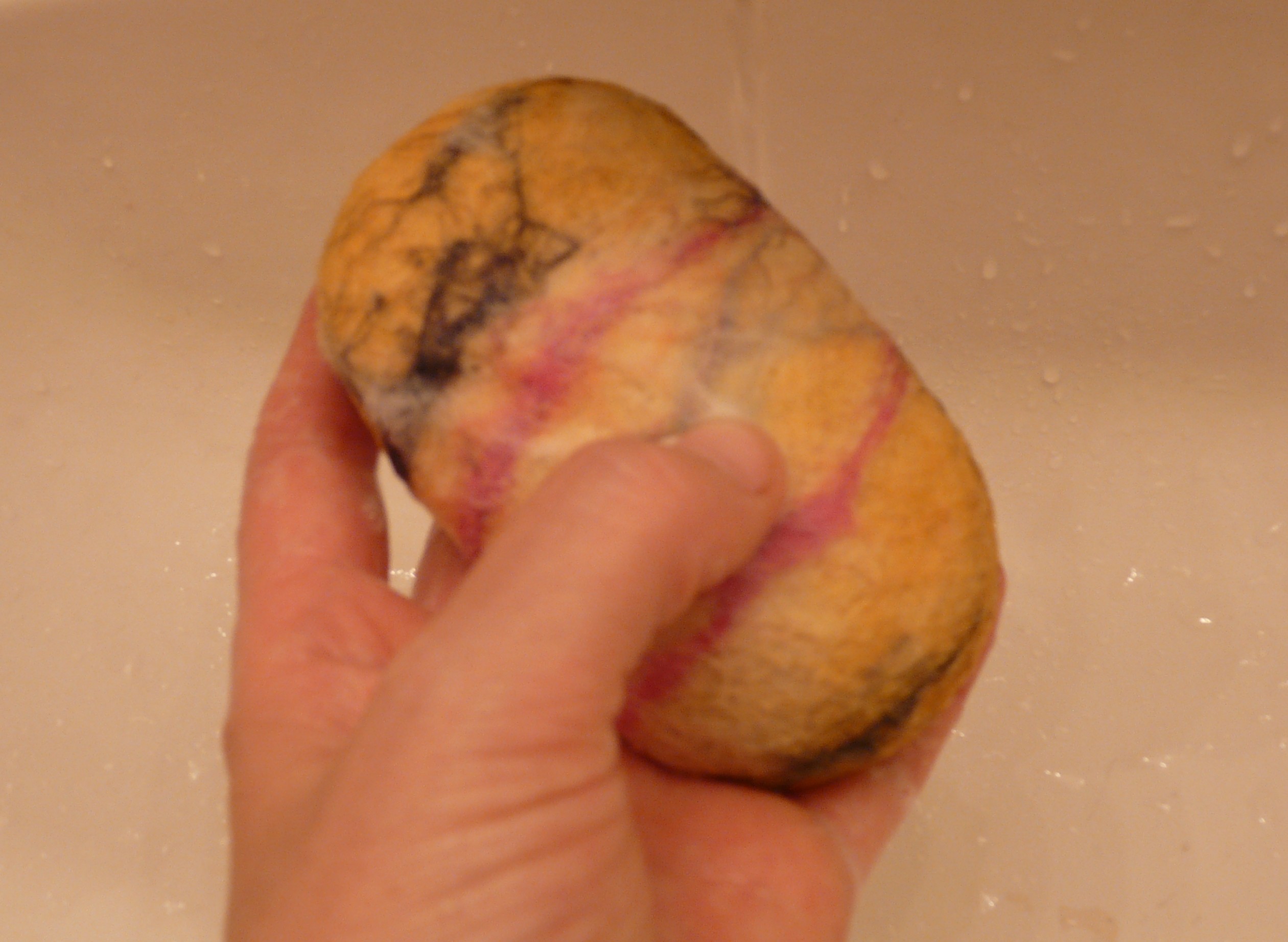
Felted wool soap from Riga (the bar of soap is on the inside) in my friend’s apartment. So typically Latvian: inspired by nature but also modern, unconventional and beautiful.

P1050596_cropped

My friend’s tautas tērpi, Latvian folk dance ensemble, hanging up on her closet door and ready for the 2013 Latvian Song and Dance Festival, which takes place in Riga every five years. The fabric was woven by her grandmother in Latvia; the fabric and style of the tautas tērpi are typical to her grandmother’s hometown.

P1050575_flag cropped

The view of the Latvian flag from inside that country’s embassy in Washington, D.C. A few Latvians maintained a sort of embassy throughout the Soviet Union’s occupation of Latvia, even though there was no home government to report to in that period.

P1050609

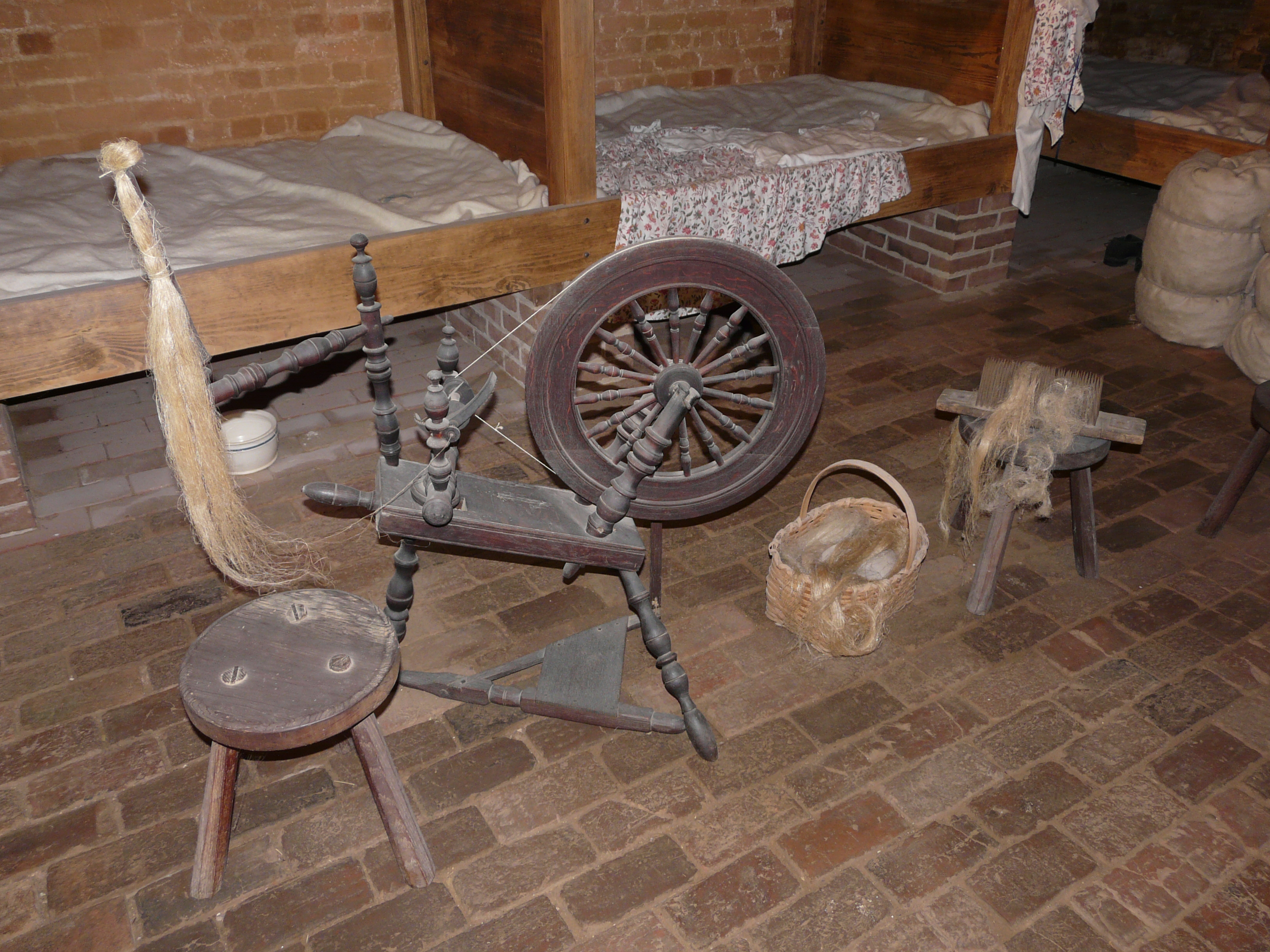
Flax spinning wheel at George Washington’s Mt. Vernon home, in the sleeping quarters of the plantation’s slaves: “The spinning house was the most important structure on the north lane. At Mount Vernon ten or more slaves were constantly employed spinning and knitting. The wool and flax fiber that they worked with were grown on site.” Mount Vernon Educational Resources (Slavery: Plantation Structure)

P1050617_cropped

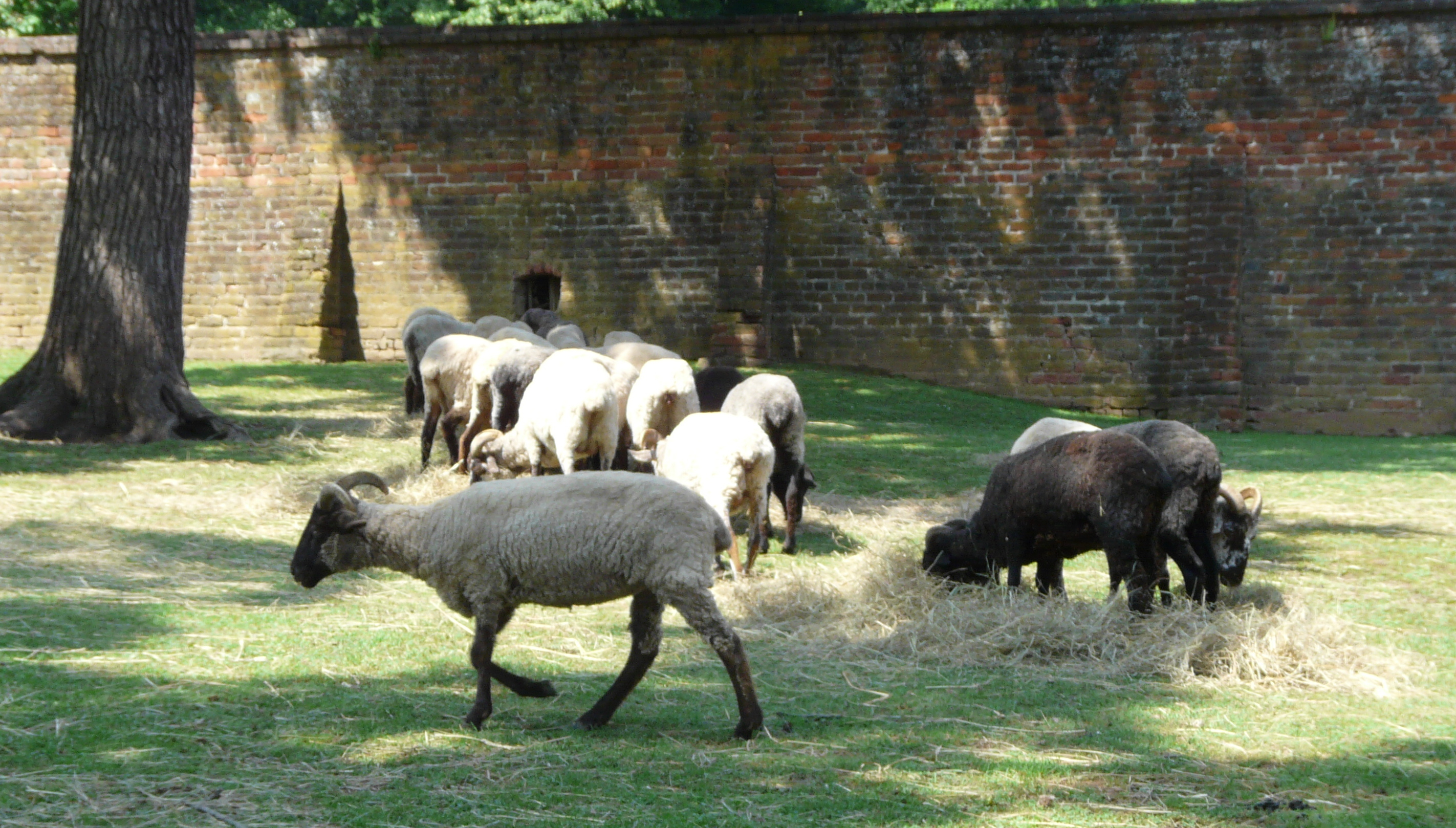
Sheep grazing at home, that is, George Washington’s home.

Knitted delights

28 Thursday Feb 2013

Posted by theknittedword in Latvia, Translations, Women's history

≈ Leave a comment

Close-up of knitted candySweets tucked into a gift box from a dear friend who was visiting Latvia, these little knitted Laima chocolates (laima – fate/good fortune) are keeping snug and warm in their colorful, stockinette wrappers. Faux knitting on foil wrappers is neat, but actual knitted wrappers for chocolates? Hmmmm…The ultimate in gift-giving!

And, here are two colorful Dainas to go with these colorful sweets. Both are about what kind of things the young girls are making for their dowries, and about what that has to do with the kinds of boys the girls are interested in.

4221.
Adi cimdus, tautu meita,
Neaud baltu villainīšu;
Jau tu pati gana zini,
Daudz ir mana bāleliņu.
1754, 641

Knit mittens, folk girl,
Don’t weave a white woolen shawl;
As you yourself already know,
Many are those courting me.

4239.
Es cimdiņa neadīju
Bez dzeltena, bez sarkana
Lai aug manis arājiņis
Dzelteniem matiņiem,
Sarkaniem vaidziņiem.
94, 3437

I don’t knit a mitten
without golden, without red
So that my ploughman grows
Golden hair,
Golden hair,
Red cheeks.

With love, from Latvia

22 Tuesday Jan 2013

Posted by theknittedword in Art, Latvia, Translations

≈ Leave a comment

After being away a few weeks during Christmas vacation I came home to three pieces of mail from Latvia, which is always a happy event: a postcard from a friend and fellow knitting enthusiast visiting Latvia, and two cards from Latvian friends.

The cover of the postcard is a picture of, appropriately, a series of traditional knitted mittens from the 18th century to the beginning of the 20th century, held at the National History Museum of Latvia:

We’re nearing the end of our Christmas travels – we fly back to B—- tomorrow. Riga has a series of Christmas trees all around town. There are saws (handsaws) put together in the shape of a tree and another that had bicycle-powered lights. We went to an organ concert today and the church was full! We had no idea organ music was so popular with Russian tourists. I’ve had lots of fun looking at yarn and knitted items both here and in Tallinn. Christmas markets are still going (tomorrow is Ephiphany, but Orthodox Christmas Eve). Lots of wonderful food!

I remember going to Riga on weekends, a three-hour bus ride from the little town I lived in out in the country. We would get farm-cheese stuffed pancakes, go to American movies, browse the windows of the expensive European and Russian stores, all while walking under the impressive art nouveau buildings towering above us. After shopping the outside craft markets by the Dome Cathedral, I remember going to a nearby art museum (I wish I could remember the name) to look at the artwork of the textile artist Edīte Paula-Vīgnere, the sister of the beloved Latvian composer and musician Raimonds Pauls. In the pieces I remember, she wove wool and linen and other materials to make sculptures, collages, and tapestries. Here is a picture of one I found online: “Saudzēsim dabu”  I remember that it was so hard for me to believe that she made and showed such art during the Soviet period, that is, starting in the 1960’s (and up to today). I saw her artwork as very representative of Latvian culture, with all of that wool and linen, glorifying nature. How did the Soviet authorities not question this work that, to me, looks like an expression of national identity, which they tried to repress in all aspects of life then? I do not know Paula-Vīgnere’s story; maybe I read too much into all of this.

And in one of the other letters, from my dear friend Māra, poetry:

Kad skaistu, baltu ziemas sarmu
no kokiem nopurina vēš,
Lai Jaunais gads nes īstu laimi
Un jaunus sapņus īstinibā vērš!

When the beautiful, white winter hoarfrost
from the trees is shaken off by the wind,
Let the new year bring real happiness
and turn new dreams into reality!

Dainas 4198, 4200, 4201

26 Friday Oct 2012

Posted by theknittedword in Latvia, Translations

≈ Leave a comment

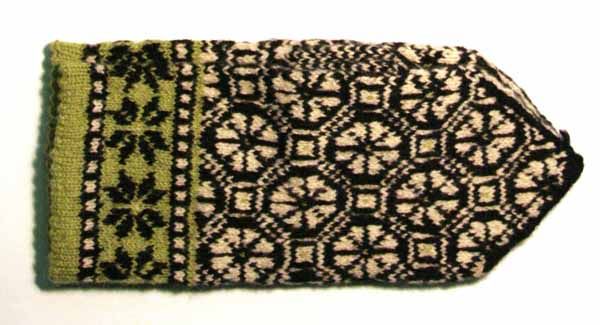
Mitten from Vidzeme region of Latvia. Image from website for 2006 NATO Summit in Riga, Latvia http://www.rigasummit.lv/en/id/galleryin/nid/120/gid/3698/

As the weather in southern Indiana has finally turned cold for good, it seems, it’s time to break out the mittens – and three more Dainas to accompany them (see my first post for more).

4198.
Bitīt’ liela, bitīt’ maza,
Bitīt’ šūnu šuvējiņa;
Meitiņ’ liela, meitiņ maza,
Meitiņ’ cimdu adītāja
1178, 658

Big bee, little bee,
Bee the honeycomb seamstress;
Big girl, little girl,
Girl the mitten knitter

4200.
Aitiņ, mana rogulīte,
Pelēkām kājiņām;
Tur adīju skaistus cimdus,
Tur – pelēkus mētelīšus.
1551, 7230

Dear sheep, my little ear,
with the gray little legs;
There I’ll knit pretty mittens,
There – a gray overcoat.

4201.
Ja man būtu balt’ aitiņa
Jel bitītes lielumā,
Es adītu raibus cimdus,
Kādus pati gribēdama.
914, 2567

If I had a little white sheep,
The size of a little bee,
I would knit motley mittens,
the kind that I would want myself.


Dainas 4199, 4261, 4249

19 Sunday Aug 2012

Posted by theknittedword in Latvia, Translations

≈ 1 Comment

My two favorite things in this world, besides my family and friends, are knitting and languages.  I love the feel of yarn in my hands, getting immersed in a project, or creating a new pattern almost as much as I love studying different languages, speaking them, or looking at the patterns in their grammar. 

So when in 1998 I was given my Peace Corps volunteer assignment to Latvia, a land of several languages and thousands of expert knitters, it should have seemed a perfect fit.  My initial reaction, however, was one of slight disappointment.  I had been devoted to the Russian language for years, starting when I was 16 years old at Russian language camp and continuing through four years of college (including one glorious year in St. Petersburg, Russia). Now finally with the help of the American government I was going to complete this long-time goal of speaking Russian as close to fluently as possible. But instead, I was assigned to a little, rural town in Latvia close to the Baltic Sea coast, many hours and a visa away from Russia.

I had loved the Russian language for so many years, but by the time I left Latvia in the year 2000 I had grown to love Latvian too. I love the long vowels, the unusual sound of the dipthong o, the soft letters ņ (like el niño in Spanish) and ķ (between k and ch) and ģ (between g and ch).  I love how some Latvians turn all adjectives and nouns into diminutives (e.g.,  chica to chiquita in Spanish), making whole sentences sound like sweet little adorable nothings.  I love the names of trees and natural things in people’s names. I love reading, singing and speaking the language of my friends there.

Scarf for Nora, my dear friend and former neighbor on Skolas iela

And I admire the culture of knitting there, honed over the last few centuries, according to their dainas, the thousands of traditional, pre-Christian song-poems which were painstakingly recorded and compiled at the end of the 19th century. Here is one section of that collection that my friend Rasma kindly scanned and e-mailed to me, entitled 6) Knitting, which includes daina numbers 4198 to 4263. (For more on the subject of knitting, a footnote reads, see the section on “Sheep tending.”) I picked out a few dainas, below, and translated them as best I could to just give a glimpse of knitting history in Latvia. 

4199.
Adītāja, rakstītāja
Liela ceļa maliņā;
Ņem, brālīti, adītāju,
Lai palika rakstītāja:
Adītāja saimi ģērba,
Rakstītāja pūru dara.
1198, 3615

A knitter, a pattern writer
On the edge of a wide road;
Take the knitter, brother,
Let the embroiderer be:
The knitter clothes the household,
The embroiderer makes the dowry.

Most of the dainas in the knitting section from Rasma are about making socks and mittens for one’s dowry, either happily, early in the morning, or sadly while watching one’s true love marry another.

4261.
Preciet mani, ciema puiši,
Es bagāta mates meita:
Viena zeķe pūriņā,
Otra – aitas mugurā.
1244, 1119

Marry me, local boys,
I’m a rich mama’s girl:
One sock in the dowry,
The other – on the back of a sheep.

The dowry, or pūra , mentioned in the first daina is made into a diminutive, pūriņa, in the second (the same is done below with mittens, from cimdi to cimdiņi). The diminutive either adds another syllable, makes the ending rhyme better with another word, or just softens the word a little. It’s also more fun to say!

And lastly, you thought you were busy in your life, behind on e-mail and forgetting the kids’ school permission slips at home?  Listen to this:  

4249.
Rudens nāk, rudens nāk,
Rudens darbi nadarīti:
Ne ir kulta kviešu rija,
Ne cimdiņi noadīti.
387, 3205

Autumn is coming, autumn is coming,
Autumn’s work is still unfinished:
Neither has the wheat been threshed,
Nor have the mittens been knitted.

Enter your email address to follow this blog and receive notifications of new posts by email.

Archives

  • March 2016
  • November 2014
  • October 2014
  • September 2014
  • September 2013
  • July 2013
  • June 2013
  • April 2013
  • March 2013
  • February 2013
  • January 2013
  • December 2012
  • November 2012
  • October 2012
  • September 2012
  • August 2012

Topics

  • American history
  • Art
  • Article review
  • Book review
  • Craft magazines
  • DPN's
  • Family history
  • Felt
  • Flax
  • Indiana
  • Industrial Revolution
  • Knitting History
  • Latvia
  • Minnesota
  • New York City
  • Pattern
  • Pottery
  • Recipe
  • Russia
  • Scandinavia
  • Sheep
  • Socks
  • Spinning
  • Translations
  • Uncategorized
  • Weaving
  • Women's history

Blogs I follow

  • carolynmaurice
  • mauricesgarden
  • Norway. Meaning?
  • Max Schireson's blog
  • Weaving Gifts Together
  • domaphile
  • ClothRoads
  • Gather
  • wool&gathering
  • JjD
  • Antris Blog
  • PRACTICE SPACE
  • KDD & Co
  • The Domestic Soundscape
  • sourtoothjournal.blogspot.com
  • The Knitted Word

Some interesting websites

  • ClothRoads “Our Mission: Creating opportunities for supporting indigenous textile artisans worldwide.”
  • Thrums: A world of textiles in books and other media
  • Bloc Socks: “Tell Your Feet the Cold War is Over”
  • Musturs: Adītāju klubiņš / Knitters club
  • Unbored: The Essential Field Guide to Serious Fun
  • Meisterdarbs: A knitting website, this page lists the most interesting Latvian hand-craft blogs

Interesting books

Meta

  • Create account
  • Log in
  • Entries feed
  • Comments feed
  • WordPress.com

Create a free website or blog at WordPress.com.

carolynmaurice

This WordPress.com site is our trip to SE Asia/November 2012

mauricesgarden

Norway. Meaning?

Max Schireson's blog

Thoughts on technology and the tech business

Weaving Gifts Together

domaphile

ClothRoads

Gather

:handmade shoppe & Co:

wool&gathering

Knitting, design, wool and other gatherings....

JjD

Antris Blog

Rokdarbi

PRACTICE SPACE

KDD & Co

Award-winning Scottish publishing and design

The Domestic Soundscape

making, listening, thinking

The Knitted Word

Privacy & Cookies: This site uses cookies. By continuing to use this website, you agree to their use.
To find out more, including how to control cookies, see here: Cookie Policy
  • Subscribe Subscribed
    • The Knitted Word
    • Already have a WordPress.com account? Log in now.
    • The Knitted Word
    • Subscribe Subscribed
    • Sign up
    • Log in
    • Report this content
    • View site in Reader
    • Manage subscriptions
    • Collapse this bar
 

Loading Comments...