• The knitting experience in culture, history, and daily life

The Knitted Word

The Knitted Word

Category Archives: Minnesota

Seeing spring, anticipating summer

29 Monday Apr 2013

Posted by theknittedword in Indiana, Minnesota, Russia, Translations

≈ 2 Comments

Knitting_Bloomington trees

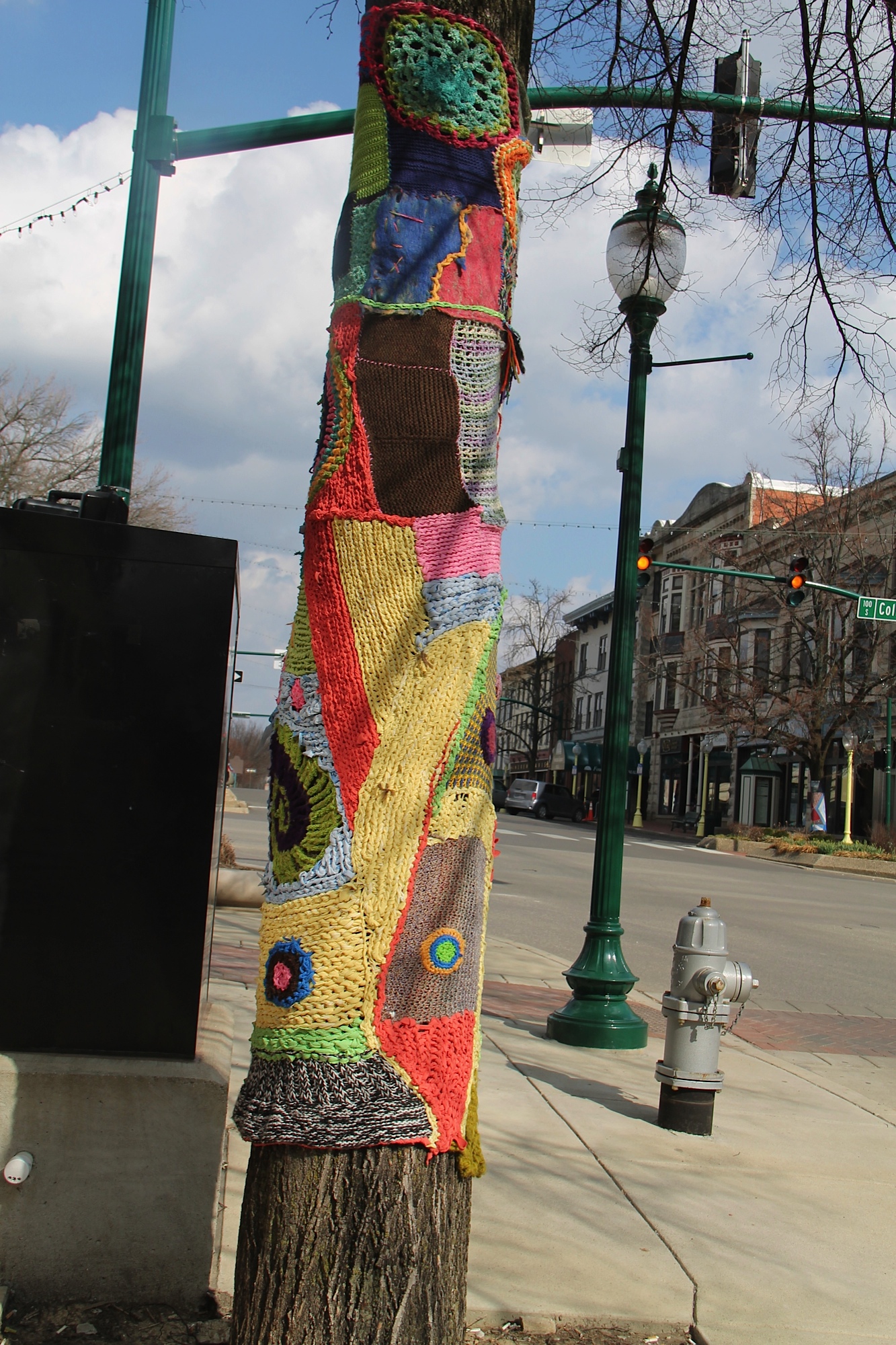
Downtown Bloomington, tree cozy in perfectly fitted lace and waiting for warmer weather.

As my neighbors and friends here in southern Indiana have balked at the cold weather this March and April – snow the first week of April! –  I have kept my smug northern Minnesotan memories to myself: childhood memories of spring where the lake could still be frozen in late May, still being cool after school let out, of huge, dense lilac bushes flourishing in the cooler weather. Most importantly, though, I quietly long for the glorious, be they brief, summers of the north country.

Spring itself is anticipation for summer, is it not? Spring is the anticipation of growth and life and harvests and color.  Except, for me in Indiana I anticipate summer in a different way, in a fearful, dreading kind of way. Most Minnesotans would probably be baffled by the thought of dreading spring, but for me in southern Indiana spring means that the hot, humid summer will come soon and last for months and I won’t want to pick up any of my beloved, warm wool for knitting, I won’t want to go outside and lay in the intense, oppressive sun, and the smell of the air conditioning inside will make me feel nauseous.  This kind of dread for summer reminds me of a poem that Anna Akhmatova translated in her poetry collection “В то время я гостила на земле…” (“At that time I visited the earth…”), Moscow: Prometei, 1990, from the Serbian poet Desanka Maksimovich. It is called “Cтрах” (“Fear” or “Dread”). Probably a little dark for the promise of bright spring, but it captures my complicated feelings toward the anticipation of summer in Indiana. Here is my translation from the Russian:

O, не приближайся.Только издалека
хочется любить мне свет очей твоих.
Счастье в ожиданье дивно и высоко,
если есть намеки, счастье только в них.

Oh, come no closer. Only from a distance
do I want to love the color of your eyes.
Happiness in anticipation is wondrous, lofty,
and even in its suggestion, happiness abides.

О, не приближайся. Есть очарованье
в сладостном томленье страха и мечты.
То, чего ты ищешь, лучше в ожиданье,
лучше то, что знаешь из предчувствий ты.

Oh, come no closer. There is charm
in the sweet darkness of fear and dreams.
Whatever you are looking for is better in the anticipation,
better yet when you know from premonition.

Нет, не приближайся. И зачем нам это?
Все лишь издалека светит, как звезда,
все лишь издалека радостью согрето,
нет, не сблизим лучше взоры никогда.

No, come not any closer. And for what?
From a distance all glows, like a star,
From a distance all is warmed up by happiness,
No, let’s not even catch each other’s glance, not ever.

Like I said, a little dark for spring probably… And it’s not fair to the lovely Indiana spring either. The flowering trees here are a delight to me every year, the dogwoods and magnolias that thrive in the long, relatively warm spring. And with the especially long spring this year, these trees, in downtown Bloomington, may be especially grateful for their extra knitted coats.

Knitting_Bloomington trees - mixed squares with car

In summer, these trees will be roasting in their sweaters under the Indiana sun!

Knitting_Bloomington trees - downtown shot street lamps

Over a dozen trees covered with knitted & crocheted patches, a project of the local yarn store, Yarns Unlimited, winter/spring 2013.

Finding a gem at grandma’s house

17 Sunday Mar 2013

Posted by theknittedword in American history, Book review, Craft magazines, Knitting History, Minnesota, Pattern, Recipe, Women's history

≈ 1 Comment

IMG_4577

Exploring at great grandma’s farm.

It is hard not to find myself exploring at my grandma’s large, old farm house in southern Minnesota, a place that once housed my grandparents, their five children, their in-laws, and a great aunt. It is a house that has names for the rooms: the girls’ room, Olga’s room, the Mystery room, great grandma and grandpa’s room. Even when full of guests for the holidays I can easily find myself alone in a room full of my family‘s history in books, sheet music, clothes, toys, and blankets.  My grandma loves history too, and going through closets she often finds old family treasures, like long-lost letters and pictures she had almost forgotten about.

On my last visit, knowing my interest in knitting my grandma showed me a small collection of pocket-sized craft magazines from the 1950’s and 60’s which her mother-in-law had subscribed to, called The Workbasket. She let me take some home, and I realize now that I assumed they would not really be of much value to my knitting except as a token of history. My assumption has partly proven true: so many things are just not my style or are totally unnecessary in the 21st century. There are patterns for crocheted doilies to protect the back and arms of your couch or to protect your tables, for hand-made lace to edge your pillows, for hand-crocheting bands to hold together your linens nicely, for tatting the edges of your handkerchiefs. The February 1956 issue has one pattern for handkerchief edging that “will really be a conversation piece if worked in two colors” (vol. 21, no. 5, page 30). Ah, now if only I had a handkerchief… Some of the advice is silly, today:  “Saran Wrap,” they write, “the clear plastic film, is a wonderful help in storing sweaters, afghans, stoles and other woolens.” And when your knees need a break from gardening? Sew your old shoulder pads into the knees of your gardening slacks!  Imagine Martha Stewart telling readers to do that, or to add rotted manure or dried cow manure to houseplants to help them grow better. Or to sell greeting cards to friends and neighbors to make money for yourself or as a fundraiser for your church: in the January 1956 issue (vol. 21, no. 4) I found no fewer than eleven large ads for how readers can do this and “make $50 to $250 or more in your spare time – without any experience!”
IMG_4587

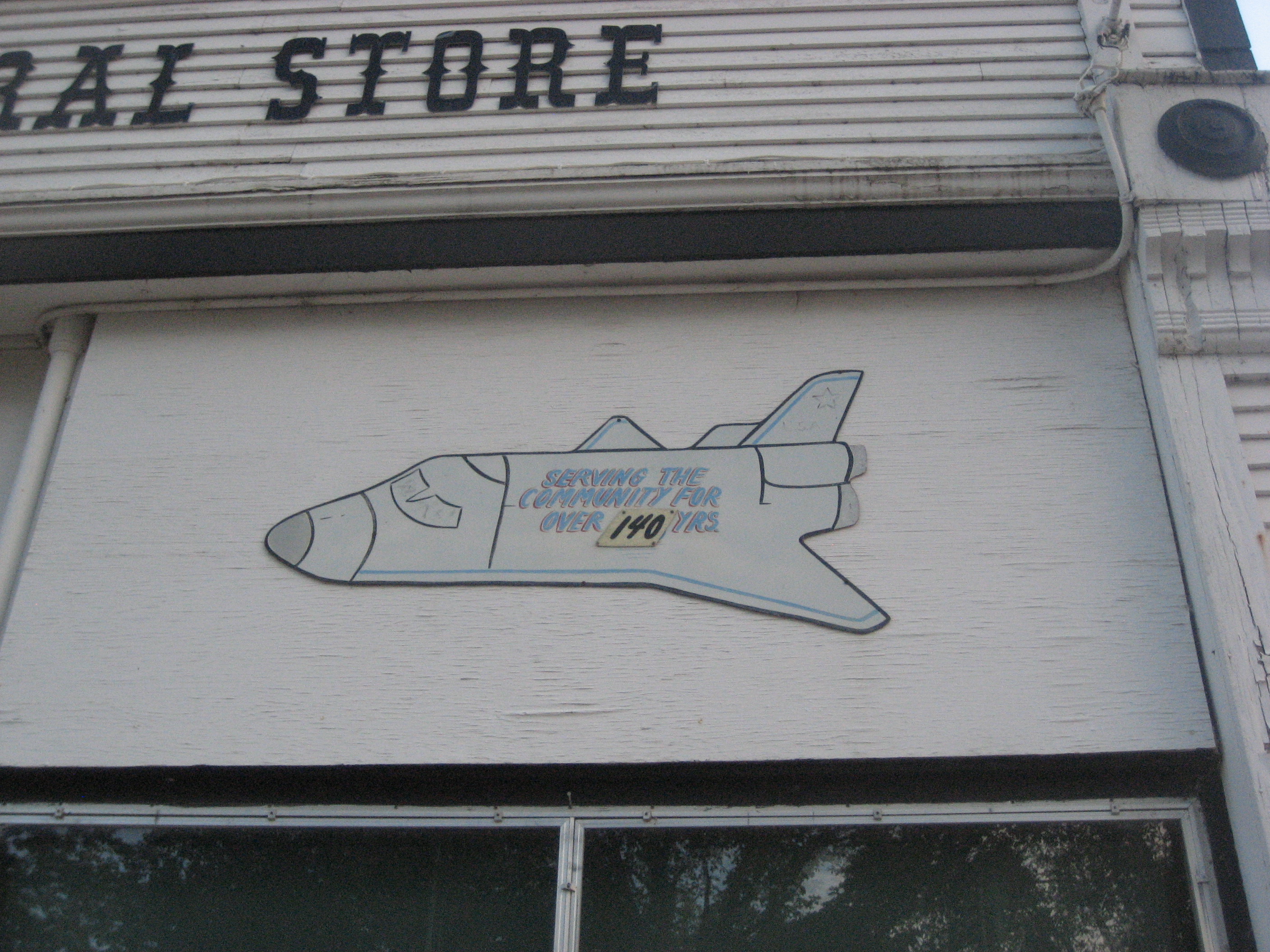
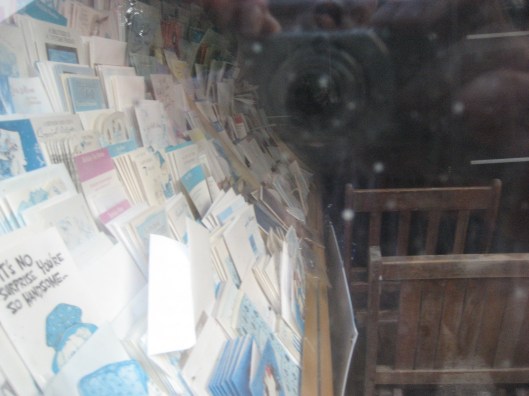
The local General Store, closed for a few years now but still stocked with cards.

Handkerchiefs, shoulder pads, slacks, ads for inexpensive accordions and Orlon, an acrylic/polyester/vinyl yarn that is now discontinued, black-and-white photos, the tiny print, the rough, yellowed paper – the magazine is definitely dated. But it’s not useless, not at all. There are so many gems I found in these journals, like the adorable crocheted belt in the June 1955 issue and the round knit rug, pattern below, which I am adding to my knitting to-do wish-list.  I am always keeping an eye out for pretty knitted summer sweaters and I happily found one with raglan sleeves and a buttoned placket in the August 1965 issue. Of course, I have to watch out for the details in these older patterns. Often the exact type of yarn is not given (the January 1956 cover sweater pattern gives only, “a deluxe sock and sport yarn was used to make this model”), and  the sizing is something to watch out for too: a small is bustline 32; large is bustline 36.  Otherwise, there are just different types of patterns to be found in this magazine. Today in knitting magazines I see patterns for hats, socks, scarves and sweaters; in these magazines from 1955, 1956, and 1965 I see place mats, rugs and sweaters. I was surprised to see that so many patterns required size 10 needles. I had assumed that this larger needle was a contemporary phenomenon.

The Workbasket started in 1935 and ceased publication in 1996, and during that time fashion and technology evolved dramatically; the change is clear even in the brief span of issues that I have, 1955-1965. In the 1955 and 1956 issues, the only color is on the cover in the template background; by my August 1965 issue, models are posing in their hand-knit sweaters in full color on the cover and sometimes inside. I still found doilies and one recipe asking for graham flour (a rarity in grocery stores today) in the 1965 issues, but gone are the card-selling advertisements and the money-making opportunities for stay-at-home women. Instead of the delicate doily place mats in the earlier issues, I found a beautifully knit place mat in April 1966 (vol. 31, no. 7, page 11) that is pretty and practical and could easily be found in a contemporary knitting journal. On a side note, I thought it was interesting to see that pink was definitely being marketed for girls in one 1966 issue: a pink-knit dress for an infant is called a “lovely little dress for some precious princess,” (More on the transition from blue to requisite pink for baby girls in the United States at: http://www.pinkisforboys.org.)

With recipe, home, garden sections and fun, quirky ways to repurpose older things, The Workbasket is, I suppose, one of the predecessors to Country Living and Martha Stewart (though in today’s magazines the ideas are less quirky and more snarky, which is getting boring to me). Exploiting and promoting the importance of home in our lives and culture, these journals are a source of ideas for women who want to beautify and update their homes and lives and families with creativity and individuality and thrift and the latest fashions. One commentator on one of the many websites devoted to The Workbasket thought that this type of journal in the 1950’s was a sign to women to stay at home and “stay in their place.” That’s tough for me to agree with. I love these types of magazines and see so much creativity and ingenuity in them, though even more so in The Workbasket than in today’s more sleek, polished, and generic magazines. I can’t help but think that this journal for that period in time was providing a space and platform for women to explore their creativity while raising kids and taking care of hearth and home, whether they wanted to or had to or felt compelled to. Based on the great number of money-making schemes in these journals, I can see that this was a magazine for women anxious to earn money; based on the great variety of ideas for how to reuse and create things, I can see that the readers were anxious to be creative, inventive, useful, and efficient.

Thinking of these magazines in history, I am reminded of how women were negotiating the new roles they found themselves in by the middle of the 20th century – new roles, yes, because the decades that their mothers and grandmothers were raising kids were so completely different from this. Who else did they have to learn from? The women in the 1930’s and 1940’s could not look back at how their mothers raised them in the 1910’s and 1920’s to figure out how to navigate this new era of canned soup and pudding mix and Orlon and higher expectations for hosting and cleanliness. (Can you tell I’ve been influenced by Ruth Schwartz Cowan? She wrote “More Work For Mother: The Ironies Of Household Technology From The Open Hearth To The Microwave” and talks at length about how expectations have been growing for the average women in the home, even as there is less help to do it.) And so while I have scoffed at the elaborate doilies and hand-croched bands to wrap one’s neatly folded linens, I also love the relatively easy way that women could bring in little touches of sophistication, of refinement, to their newly modernized homes while managing food and home and children and working, teaching piano, doing farm chores, or raising money for school. Even my history-loving grandma, who is 92 and a devoted musician in love with her piano, has delighted me by giving us all hand-embroidered towels as gifts. Where does she find the time, I wonder?

By the way, I’m not the only one not untouched by my grandmother’s craftiness: while reading a feature about a textile artist in the February 2013 Martha Stewart, the featured artist was asked for the inspiration behind her witty, whimsical, artful creations. Her answer? “My grandmothers tatted or made their own dolls or nutty puppets,” she said. Exactly.

Round Knit Rug, from the June 1955 issue, Vol. 20, no. 9, page 14-15: Rug yarn and number 10 wooden knitting needles were used in making this simple wedge pattern. The completed rug may have 11 or 12 wedges in all. It may be made any size and may be made oval if desired by knitting full length rows for sides. Abbreviations: K (knit); p (purl); sts (stitches); rnd (round). Cast on 48 sts (or any multiple of 3 depending on size desired).

Rnd 1: K 6, p 3, turn.
Rnd 2: K 9.
Rnd 3: K 6, p 6, turn.
Rnd 4: K 12
Rnd 5: K 6, p 9, turn.
Rnd 6: K 15.
Rnd 7: K 6, p 12, turn.
Rnd 8: K 18.
Rnd 9: K 6, p 15, turn.
Rnd 10: K 21.
Rnd 11: K 6, p 18, turn.
Rnd 12: K 24.
Rnd 13: K 6, p 21, turn.
Rnd 14: K 27.
Rnd 15: K 6, p 24, turn.
Rnd 16: K 30.
Rnd 17: K 6, p 27, turn.
Rnd 18: K 33.
Rnd 19: K 6, p 30, turn.
Rnd 20: K 36.
Rnd 21: K 6, p 33, turn.
Rnd 22: K 39.
Rnd 23: K 6, p 36, turn.
Rnd 24: K 42.
Rnd 25: K 6, p 39, turn.
Rnd 26: K 45.
Rnd 27: K 6, p 42, turn.
Rnd 28: K 48.
Rnd 29: Work same as rnd 1. This begins the second wedge.

Make 11 or 12 wedges in all. Sew last row to the first row. Bind off on a knit round.

IMG_4594

My grandma’s local general store, which closed down after 140 years.

Apricot Corn Flake French toast, my foodie sister-in-law has informed me, is still a very cool, very contemporary thing to make today. From the September 1966 issue, no. 12, vol. 31, page 30: “You’ll have many calls for seconds for this Apricot Corn Flake Toast” — 2 eggs, ½ cup apricot nextar; ¼ tsp salt, 8 slices day old bread, 3 cups corn flakes presweetened and crushed to make 1 ½ cups, 2-3 T butter or margarine: Combine eggs, apricot nectar and salt; beat. Dip bread slices in egg mixture, then cover both sides with cereal crumbs. Pan fry in butter or margarine until lightly browned and crisp on both sides, turning once. Serve hot with syrup, jelly or confectioners’ sugar. Yields 4 servings. 
IMG_4575

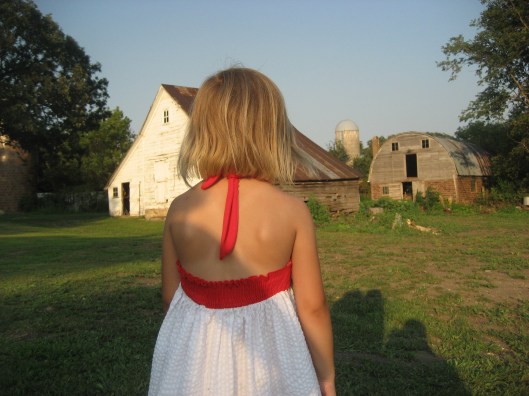
My daughter taking pictures at great grandma’s farm.
Crossing disciplines

27 Wednesday Feb 2013

Posted by theknittedword in Indiana, Minnesota, New York City, Pottery

≈ Leave a comment

Close-up of knitted pottery

Knitted porcelain for sale at the grocery store

Just out of the corner of my eye I caught it: a little porcelain ramekin with a pretty cable-knit pattern imprinted on the side, serving as a penny dish at my grocery store’s pharmacy counter.  What a lovely contrast between shiny, smooth porcelain and lofty, fuzzy yarn; between something made quickly in the thousands in a factory in China (I checked) and the hand-made cabled socks that take me hours to complete; between warm and cozy, and cold and hard.

It reminds me of my own brief foray away from knitting to pottery when I was living in New York years ago. For one winter, a couple of days every week I would leave my desk job on west 39th street and take the train up to the Upper West Side to work with and learn about throwing clay on the wheel. Afterward I would hop on the M60 bus and travel across the Tri-Borough bridge to Astoria, where I lived for a short time. While I usually took the train to get around the city, crossing the bridge seated up high on a bus was a treat: for once I could let my eyes relax and stretch beyond the confinement of the tall, gray buildings and let my gaze rest on the expansive lower Manhattan skyline across the river. The breathtaking view of the city, lit up after dusk, was all too brief. I felt like I had been let out of a cage and yearned for an entire day to stare at the wide, open expanse of the ocean, or perhaps the lake I grew up on in northern Minnesota.

But besides the meditative bus ride, there was something so satisfying about having just worked with mucky, sticky clay, about having created something literally from the earth with the force of my hands (so much more strength than knitting!). Working with the clay helped me forget the itchy feeling of sitting behind a desk all day under dark fluorescent lights, clicking a plastic mouse and keyboard and pushing buttons on the telephone. At my office job, there was nothing that required the absolute strength of my hands and forearms and even back muscles, nothing of the earth about shuffling light, dry sheets of paper in a temperature-controlled environment. Granted, I loved so much of my work – the wonderful people I worked with and met, the mission of the organization, carefully crafting language and taking phone calls that could directly help someone in need – but it was knowledge work, as it’s called, not visceral, physical labor, and I often romanticized leaving my desk job and devoting myself to clay full time. My best work at the pottery studio, however, was heavy and rough, and several bowls I had intended for the kitchen lost their meaning when I used non-food-safe glaze. Despite my failures with clay, I appreciate nice hand-made pottery all the better now – the smooth finish, the lightness, the beauty of the glaze.

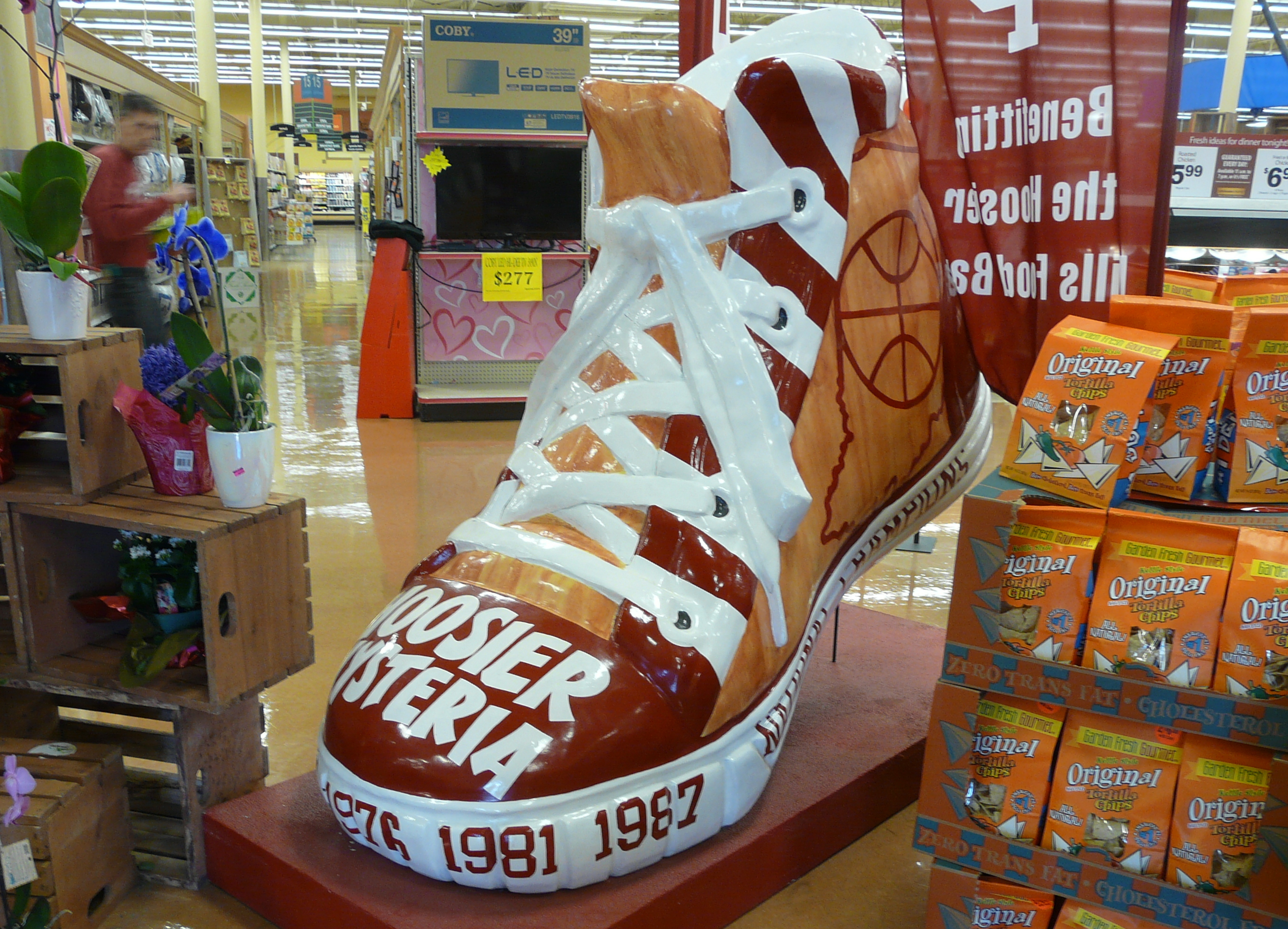
By the way if you’re thinking that my grocery store is pretty high-end for such a fine penny dish at the checkout, I’ll have you know that just around the corner from the pharmacy counter was this striking piece of ceramics (presumably hand-made, even, unless there are thousands of these around the country). Go Hoosiers!

P1050364

Vær så god!

31 Monday Dec 2012

Posted by theknittedword in DPN's, Family history, Minnesota, Pattern, Scandinavia, Socks

≈ Leave a comment

My double-themed Christmas knitting fervor this year is almost complete: I sent off my niece’s white knit-in-the-round-with-DPNs hat (picture in the last post); the reversible double-knit potholder for my sister-in-law is pretty, but too small and better suited as a washcloth; the knit-in-the-round socks are beautiful but also too small for my mom, so that the lovely patterned reinforced heel slides onto the foot more than it should.  Now they will go to my sister-in-law for her January birthday and I will make another pair for my mom – then, finally, the knitting double marathon will be over, for the time being.

IMG_4958

Pattern: TPHPE by Heather Zoppetti, free on Ravelry

IMG_4953

Pattern: Toe-up Socks by Leah Mitchell from “More Last-minute Knitted Gifts” by Joelle Hoverson

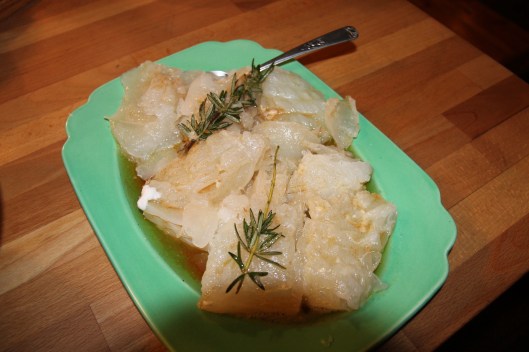
I can’t help but knit something special for my mom for Christmas. It is for her the most important event of the whole year. It is a time that brings us all back to her childhood, growing up on a dairy farm in a town of Norwegian immigrants where her mother always made the traditional Norwegian dinner at Christmas, and which we continue to make every year: lutefisk, lefse, Swedish meatballs; rømmegrøt (a cream porridge) and yifta.  Beautiful sugar cookies – krumkake, sandbakels, fattigman, rosettes, and drømmer cookies – were made by my grandma, my great aunt Imogene, and other relatives, neighbors, or members of the Norwegian Lutheran church where my grandma played organ for more than forty years.  At the dinner table on Christmas eve, after church, my grandma and grandpa passed the food with a “vær så god”: here you go, your welcome. Tusen takk, is the reply. After dinner we sang with my mom’s sisters Silent Night, Oh Come All Ye Faithful, and Jeg er så glad hver julekveld (I am so happy on Christmas eve) around the piano, all of the songs that my mom now puts on repeat on her radio for most of December and probably January too.

IMG_3953

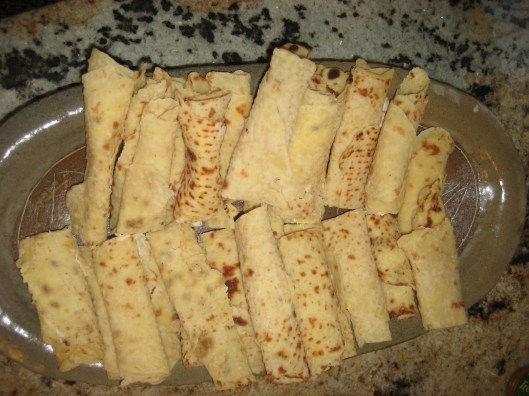
Lefse: like a tortilla made with potato and flour, buttered and rolled up

IMG_3534

Lutefisk: cod soaked in lye, boiled several hours to remove the lye, and served with melted butter

IMG_3951

Yifta: cranberry sauce, whipped cream, graham cracker crumbs

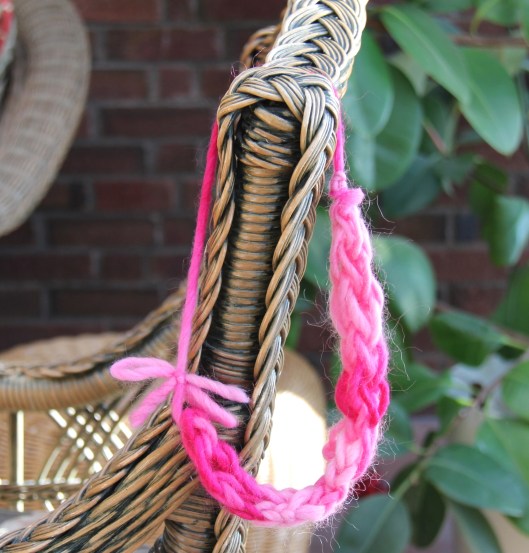
With such rich traditions and meaning I can’t give my mom something simple. And so I knit for her, though not always perfectly. Happily, my daughter saved my too-small-sock  gift by giving my mom the best knitted surprise of all: a pink wool necklace which she knitted on her little, five-year-old fingers. Vær så god, mom!

IMG_3620

Enter your email address to follow this blog and receive notifications of new posts by email.

Archives

  • March 2016
  • November 2014
  • October 2014
  • September 2014
  • September 2013
  • July 2013
  • June 2013
  • April 2013
  • March 2013
  • February 2013
  • January 2013
  • December 2012
  • November 2012
  • October 2012
  • September 2012
  • August 2012

Topics

  • American history
  • Art
  • Article review
  • Book review
  • Craft magazines
  • DPN's
  • Family history
  • Felt
  • Flax
  • Indiana
  • Industrial Revolution
  • Knitting History
  • Latvia
  • Minnesota
  • New York City
  • Pattern
  • Pottery
  • Recipe
  • Russia
  • Scandinavia
  • Sheep
  • Socks
  • Spinning
  • Translations
  • Uncategorized
  • Weaving
  • Women's history

Blogs I follow

  • carolynmaurice
  • mauricesgarden
  • Norway. Meaning?
  • Max Schireson's blog
  • Weaving Gifts Together
  • domaphile
  • ClothRoads
  • Gather
  • wool&gathering
  • JjD
  • Antris Blog
  • PRACTICE SPACE
  • KDD & Co
  • The Domestic Soundscape
  • sourtoothjournal.blogspot.com
  • The Knitted Word

Some interesting websites

  • ClothRoads “Our Mission: Creating opportunities for supporting indigenous textile artisans worldwide.”
  • Thrums: A world of textiles in books and other media
  • Bloc Socks: “Tell Your Feet the Cold War is Over”
  • Musturs: Adītāju klubiņš / Knitters club
  • Unbored: The Essential Field Guide to Serious Fun
  • Meisterdarbs: A knitting website, this page lists the most interesting Latvian hand-craft blogs

Interesting books

Meta

  • Create account
  • Log in
  • Entries feed
  • Comments feed
  • WordPress.com

Create a free website or blog at WordPress.com.

carolynmaurice

This WordPress.com site is our trip to SE Asia/November 2012

mauricesgarden

Norway. Meaning?

Max Schireson's blog

Thoughts on technology and the tech business

Weaving Gifts Together

domaphile

ClothRoads

Gather

:handmade shoppe & Co:

wool&gathering

Knitting, design, wool and other gatherings....

JjD

Antris Blog

Rokdarbi

PRACTICE SPACE

KDD & Co

Award-winning Scottish publishing and design

The Domestic Soundscape

making, listening, thinking

The Knitted Word

Privacy & Cookies: This site uses cookies. By continuing to use this website, you agree to their use.
To find out more, including how to control cookies, see here: Cookie Policy
  • Subscribe Subscribed
    • The Knitted Word
    • Already have a WordPress.com account? Log in now.
    • The Knitted Word
    • Subscribe Subscribed
    • Sign up
    • Log in
    • Report this content
    • View site in Reader
    • Manage subscriptions
    • Collapse this bar
 

Loading Comments...