Women’s handiwork of the past, loose threads peeking out, often only reveals itself surreptitiously in the larger stories of world politics, war, power, and science. It’s probably because I’m looking for fiber that I see it in these unexpected places, like I did in historian Jill Lepore’s recent article about the life of Jane Franklin Mecom (1712-1794), youngest sister and confidante to Benjamin Franklin (“The Prodigal Daughter,” The New Yorker, July 8, 2013).
Lepore, a regular contributor to The New Yorker and a professor of American History at Harvard University, is also looking at the underbelly of history, the flip side of Benjamin Franklin’s famous self, when she finds correspondence between Ben and his littlest sister Jane, or Jenny, as she was called. Just think of it: Here were two children from the same, poor family who had such different lives and expectations because of their sex. Jane, typical of the times, never went to school, married at age 15 and gave birth to 12 children, 11 of whom died before she did. According to Lepore, Jane was in debt, her husband drank heavily and was mentally ill, and two of her children were violently insane and had to be locked up. Benjamin, on the other hand, learned to read and write well in school and went on to become remembered in history as one of the Founding Fathers of the United States as well as a great inventor, politician, and scientist.
Jane did write a book of sorts though. The paper in her book, Lepore writes, “was made from rags, soaked and pulped and strained and dried. Her thread was made from flax, combed and spun and dyed and twisted.” It sounds like a tag on Etsy: “hand-made recycled cloth paper, local, homespun and naturally dyed linen thread – a lovely, handmade keepsake for recording your baby’s first words and funny expressions,” or something like that. Rather, in Jane’s hand-made book, she chronicled the births of her many children, some of them terribly brief: Josiah Mecom born June 4th, 1729 and died May 8th, 1730; Abiah Mecom born August 1, 1751 and died within the year. She recorded her own birth, March 27, 1712, her marriage on July 27, 1727, and the death of her mother, May 8, 1752. Such a brief, rudimentary record of a person’s life pales in importance in comparison to her older brother’s numerous well recorded ideas, findings, discussions, and policies, now found in the country’s greatest libraries and museums for posterity.
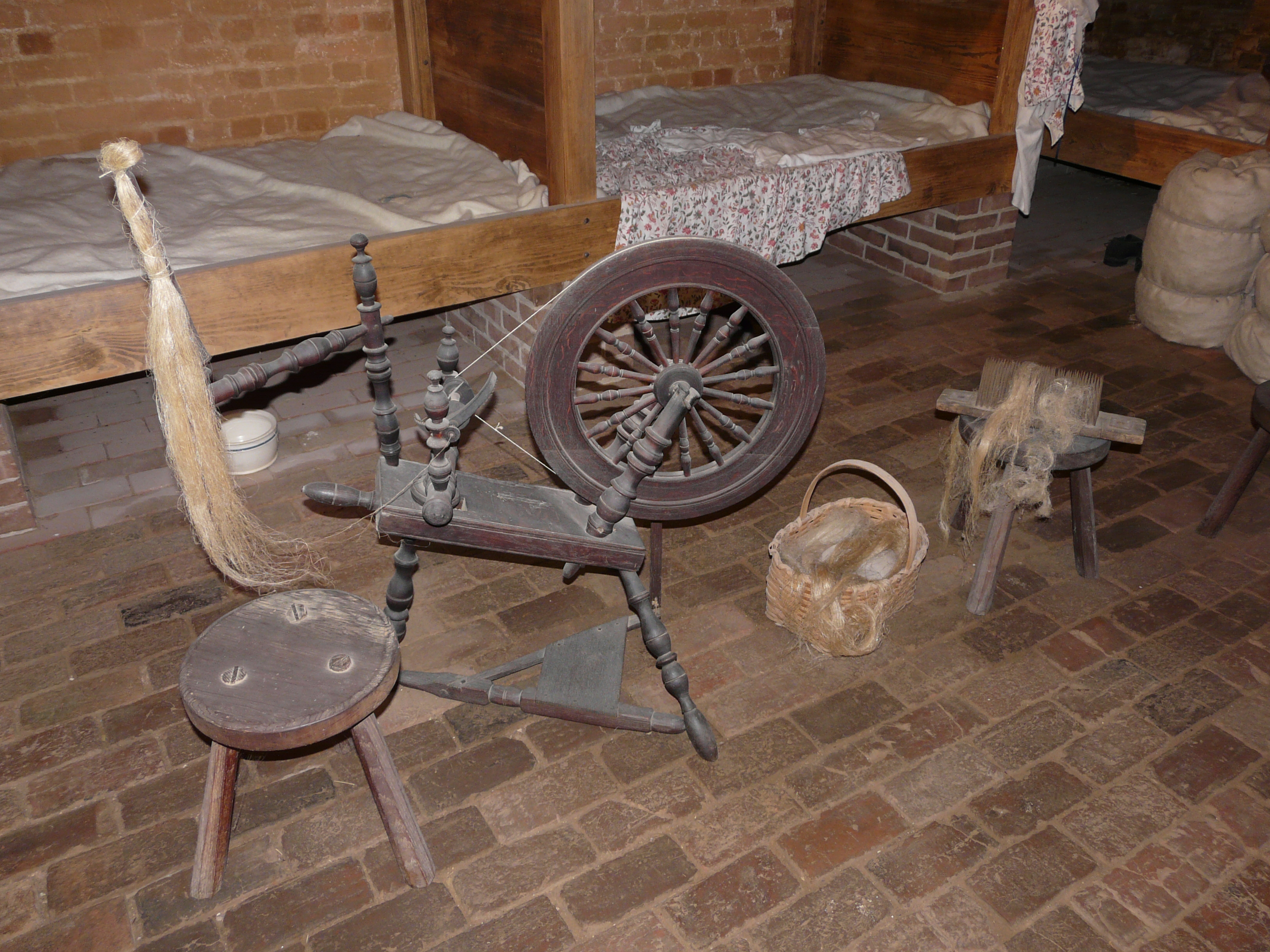
The story in this New Yorker article is not solely about Jane’s book of rags and linen, however, as much as I would love to find out more details about the book itself. I wonder about Jane’s resourcefulness – was it common to the era, especially for a poor, uneducated family? Flax was a common fiber before the Industrial Revolution started producing cotton in the last three decades of the 1700’s and she probably had some flax like most households would have. But using it to make a book still demands an effort that must have been frequently thwarted by the nagging, pressing needs of her children (Lepore finds evidence of this nagging in Jane’s letters to Ben when she excuses herself for not writing more because her children won’t let her). Living in an urban area probably meant that she didn’t grow flax herself; did she buy it in bulk and process it herself? Did urban women at the time buy it already spun and dyed, or even just buy it already made into cloth? As for the hand-made paper, is it difficult to make paper from rags and was a woman making it at home common at the time? We don’t know that Jane made these products herself or if she bought them. How much of a challenge was it really for her to record the major milestones of her life? Why didn’t she use the paper that she used for her letters to her brother? Before the Industrial Revolution that started in the last quarter of her life, fiber consumed so much of women’s work besides cooking, cleaning, tending the garden and raising kids. Too bad Jane didn’t write more about the mundane, domestic details of her life like just how much of this flax and pulped paper she worked with every day, and how it felt in her hands, and how she could do that while raising a large family, and what she thought when affordable, ready-made cotton fabric started making its way into her daily routine.
So no, we don’t know these details. Lepore’s New Yorker article is not really about fiber; it is a heartfelt ode from a daughter to her mother about coming to be interested in Jane Franklin Mecom despite Jane’s sad and relatively unimportant life, and even though it was always Benjamin Franklin’s brilliance and influential life that was the more interesting to Lepore as a writer and historian. As Lepore writes, “Every year of his life, his world got bigger.” Jane’s world, on the other hand, remained small, constrained by her sex and bound by the physical burdens and trials of marital expectations, pregnancy, breastfeeding, and child-rearing, of flax yarn and pulp rags for a diary even though her intellect and passion and potential may have been great (Lepore writes that Jane expressed interested in reading Benjamin’s political papers).
One thing that Lepore mentions about Jane Franklin Mecum makes me feel both comforted and ambivalent, as a woman myself struggling to find the happy medium between the constraints of child-rearing and domesticity and big, professional goals: Jane had written in one letter that, “The most Insignificant creature on Earth may be made some use of in the scale of Beings.” Lepore brings it up as a redeeming factor in Jane’s rather poor, sad life. It is certainly a tenet of Christian thinking, which Jane espoused in her letters, that God has given us all a role on this earth. While I am happy that Jane found hope and promise in the smaller, necessary things that people like her do – and I agree that not all people can be great movers and shakers like Benjamin Franklin – I also see an attempt at justification for a less influential, less fulfilling life. Unfortunately women like Jane have historically been the ones to be of less “use,” with historically scarce political influence and power to make the great changes in the world. Women were usually the ones responsible for making the flax into linen thread that would be woven and sewn to clothe the great men thinkers and politicians and lawmakers. Both jobs are necessary of course; rather, I just hope that it wouldn’t have to always be determined by sex who does the weaving and who writes the laws.




 The Knitted Word