• The knitting experience in culture, history, and daily life

The Knitted Word

The Knitted Word

Category Archives: American history

One special, hand-made book

23 Tuesday Jul 2013

Posted by theknittedword in American history, Flax, Industrial Revolution, Women's history

≈ 2 Comments

Women’s handiwork of the past, loose threads peeking out, often only reveals itself surreptitiously in the larger stories of world politics, war, power, and science. It’s probably because I’m looking for fiber that I see it in these unexpected places, like I did in historian Jill Lepore’s recent article about the life of Jane Franklin Mecom (1712-1794), youngest sister and confidante to Benjamin Franklin (“The Prodigal Daughter,” The New Yorker, July 8, 2013).

Lepore, a regular contributor to The New Yorker and a professor of American History at Harvard University, is also looking at the underbelly of history, the flip side of Benjamin Franklin’s famous self, when she finds correspondence between Ben and his littlest sister Jane, or Jenny, as she was called.  Just think of it: Here were two children from the same, poor family who had such different lives and expectations because of their sex. Jane, typical of the times, never went to school, married at age 15 and gave birth to 12 children, 11 of whom died before she did. According to Lepore, Jane was in debt, her husband drank heavily and was mentally ill, and two of her children were violently insane and had to be locked up. Benjamin, on the other hand, learned to read and write well in school and went on to become remembered in history as one of the Founding Fathers of the United States as well as a great inventor, politician, and scientist.

Jane did write a book of sorts though. The paper in her book, Lepore writes, “was made from rags, soaked and pulped and strained and dried. Her thread was made from flax, combed and spun and dyed and twisted.”  It sounds like a tag on Etsy: “hand-made recycled cloth paper, local, homespun and naturally dyed linen thread – a lovely, handmade keepsake for recording your baby’s first words and funny expressions,” or something like that. Rather, in Jane’s hand-made book, she chronicled the births of her many children, some of them terribly brief: Josiah Mecom born June 4th, 1729 and died May 8th, 1730; Abiah Mecom born August 1, 1751 and died within the year.  She recorded her own birth, March 27, 1712, her marriage on July 27, 1727, and the death of her mother, May 8, 1752. Such a brief, rudimentary record of a person’s life pales in importance in comparison to her older brother’s numerous well recorded ideas, findings, discussions, and policies, now found in the country’s greatest libraries and museums for posterity.

The story in this New Yorker article is not solely about Jane’s book of rags and linen, however, as much as I would love to find out more details about the book itself. I wonder about Jane’s resourcefulness – was it common to the era, especially for a poor, uneducated family? Flax was a common fiber before the Industrial Revolution started producing cotton in the last three decades of the 1700’s and she probably had some flax like most households would have. But using it to make a book still demands an effort that must have been frequently thwarted by the nagging, pressing needs of her children (Lepore finds evidence of this nagging in Jane’s letters to Ben when she excuses herself for not writing more because her children won’t let her). Living in an urban area probably meant that she didn’t grow flax herself; did she buy it in bulk and process it herself? Did urban women at the time buy it already spun and dyed, or even just buy it already made into cloth? As for the hand-made paper, is it difficult to make paper from rags and was a woman making it at home common at the time? We don’t know that Jane made these products herself or if she bought them. How much of a challenge was it really for her to record the major milestones of her life? Why didn’t she use the paper that she used for her letters to her brother? Before the Industrial Revolution that started in the last quarter of her life, fiber consumed so much of women’s work besides cooking, cleaning, tending the garden and raising kids. Too bad Jane didn’t write more about the mundane, domestic details of her life like just how much of this flax and pulped paper she worked with every day, and how it felt in her hands, and how she could do that while raising a large family, and what she thought when affordable, ready-made cotton fabric started making its way into her daily routine.

So no, we don’t know these details.  Lepore’s New Yorker article is not really about fiber; it is a heartfelt ode from a daughter to her mother about coming to be interested in Jane Franklin Mecom despite Jane’s sad and relatively unimportant life, and even though it was always Benjamin Franklin’s brilliance and influential life that was the more interesting to Lepore as a writer and historian. As Lepore writes, “Every year of his life, his world got bigger.” Jane’s world, on the other hand, remained small, constrained by her sex and bound by the physical burdens and trials of marital expectations, pregnancy, breastfeeding, and child-rearing, of flax yarn and pulp rags for a diary even though her intellect and passion and potential may have been great (Lepore writes that Jane expressed interested in reading Benjamin’s political papers).

One thing that Lepore mentions about Jane Franklin Mecum makes me feel both comforted and ambivalent, as a woman myself struggling to find the happy medium between the constraints of child-rearing and domesticity and big, professional goals: Jane had written in one letter that, “The most Insignificant creature on Earth may be made some use of in the scale of Beings.” Lepore brings it up as a redeeming factor in Jane’s rather poor, sad life. It is certainly a tenet of Christian thinking, which Jane espoused in her letters, that God has given us all a role on this earth. While I am happy that Jane found hope and promise in the smaller, necessary things that people like her do – and I agree that not all people can be great movers and shakers like Benjamin Franklin – I also see an attempt at justification for a less influential, less fulfilling life. Unfortunately women like Jane have historically been the ones to be of less “use,” with historically scarce political influence and power to make the great changes in the world. Women were usually the ones responsible for making the flax into linen thread that would be woven and sewn to clothe the great men thinkers and politicians and lawmakers. Both jobs are necessary of course; rather, I just hope that it wouldn’t have to always be determined by sex who does the weaving and who writes the laws.

Home is where the heart is spun

18 Tuesday Jun 2013

Posted by theknittedword in American history, Felt, Flax, Latvia, Sheep, Spinning, Weaving

≈ Leave a comment

Flax at Mount Vernon, George Washington's home outside of Alexandria, VA.

Blue flax flowers in bloom at Mount Vernon, George Washington’s plantation home outside of Alexandria, VA.

I am home after a whirlwind, week-long road trip (twelve hours each way) to the East Coast to visit old friends. Four different houses I stayed in; four sets of friends opened up their homes to me and my family in the middle of work and school demands and welcomed our often tired and hungry selves into their lives for a bit.

When my six-year-old daughter visits a friend’s house for the first time, she clings to me until she can muster up the courage to ask the most important item on her agenda, expressed in a shy whisper: “I want to see her room.” I can relate to that.  Inside each of my friends’ houses and apartments – even visiting George Washington’s home at Mount Vernon and and touring the offices at the Latvian Embassy in Washington, D.C. – is like its own little museum to observe, to appreciate, to help one understand each resident a little better. And I get to feel their lives for a moment: I am a traveling diplomat when I browse the wall of a friend’s photos from around the world; I get to watch TV and drink coffee surrounded by beautiful paintings in the homes of friends who are artists; I get shivers when I stroll by the wall of black-and-white portraits of ambassadors who maintained a diplomatic “house” despite the Soviet Union’s occupation of their home country; I shudder at the conditions of the rooms that slaves once lived and worked in on Washington’s plantation home; and I find comfort in the artwork of my friends’ children, who have posted their work on the fridge and their bedroom doors using stickers and lots of tape.

This last week, I saw home as a place of refuge; home as a place to keep treasures from another land; home as a terrible burden of work and suffering; home as a place to create and admire beauty. Here is a bit of what I saw:

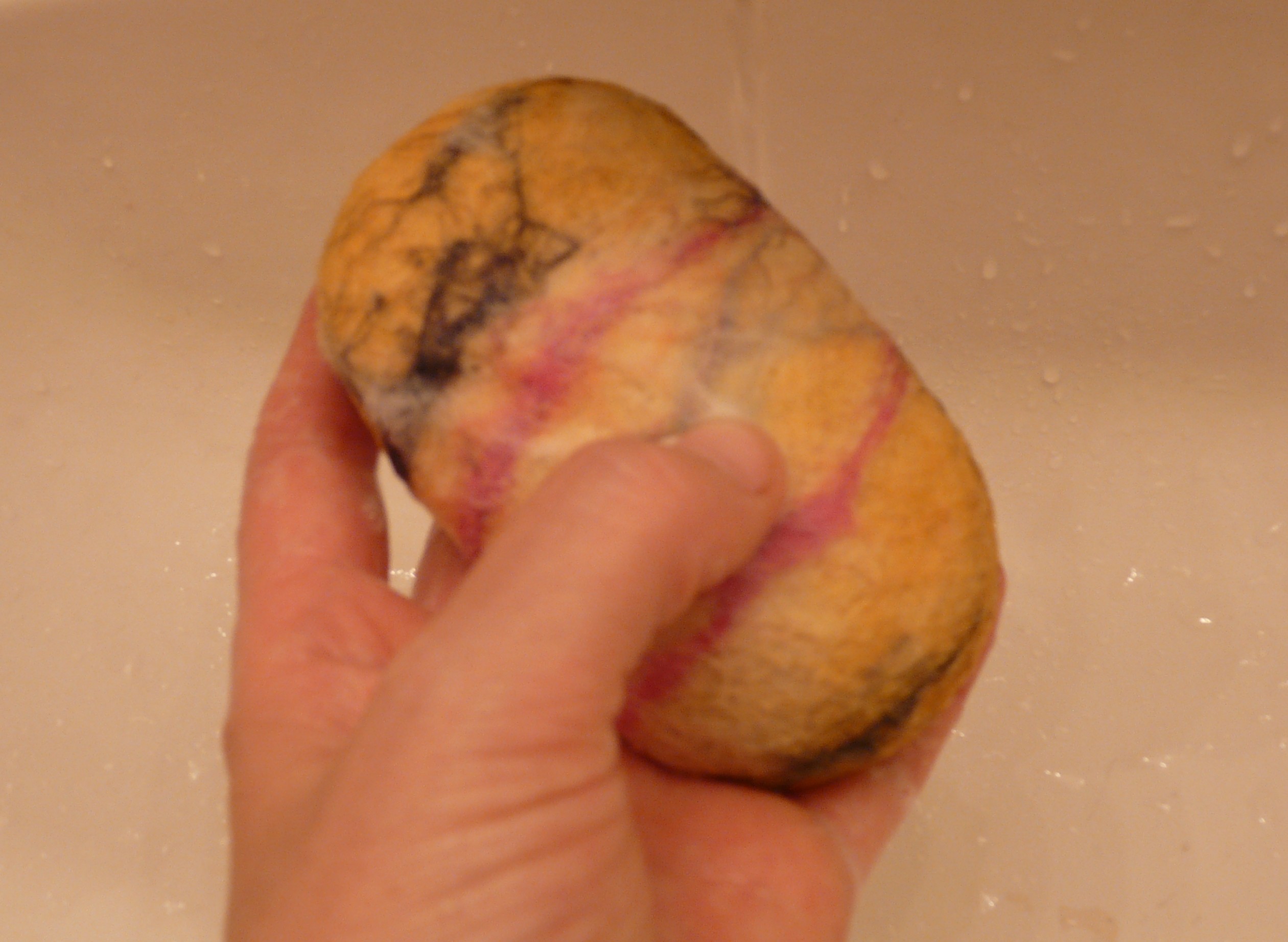
Felted wool soap from Riga (the bar of soap is on the inside) in my friend’s apartment. So typically Latvian: inspired by nature but also modern, unconventional and beautiful.

P1050596_cropped

My friend’s tautas tērpi, Latvian folk dance ensemble, hanging up on her closet door and ready for the 2013 Latvian Song and Dance Festival, which takes place in Riga every five years. The fabric was woven by her grandmother in Latvia; the fabric and style of the tautas tērpi are typical to her grandmother’s hometown.

P1050575_flag cropped

The view of the Latvian flag from inside that country’s embassy in Washington, D.C. A few Latvians maintained a sort of embassy throughout the Soviet Union’s occupation of Latvia, even though there was no home government to report to in that period.

P1050609

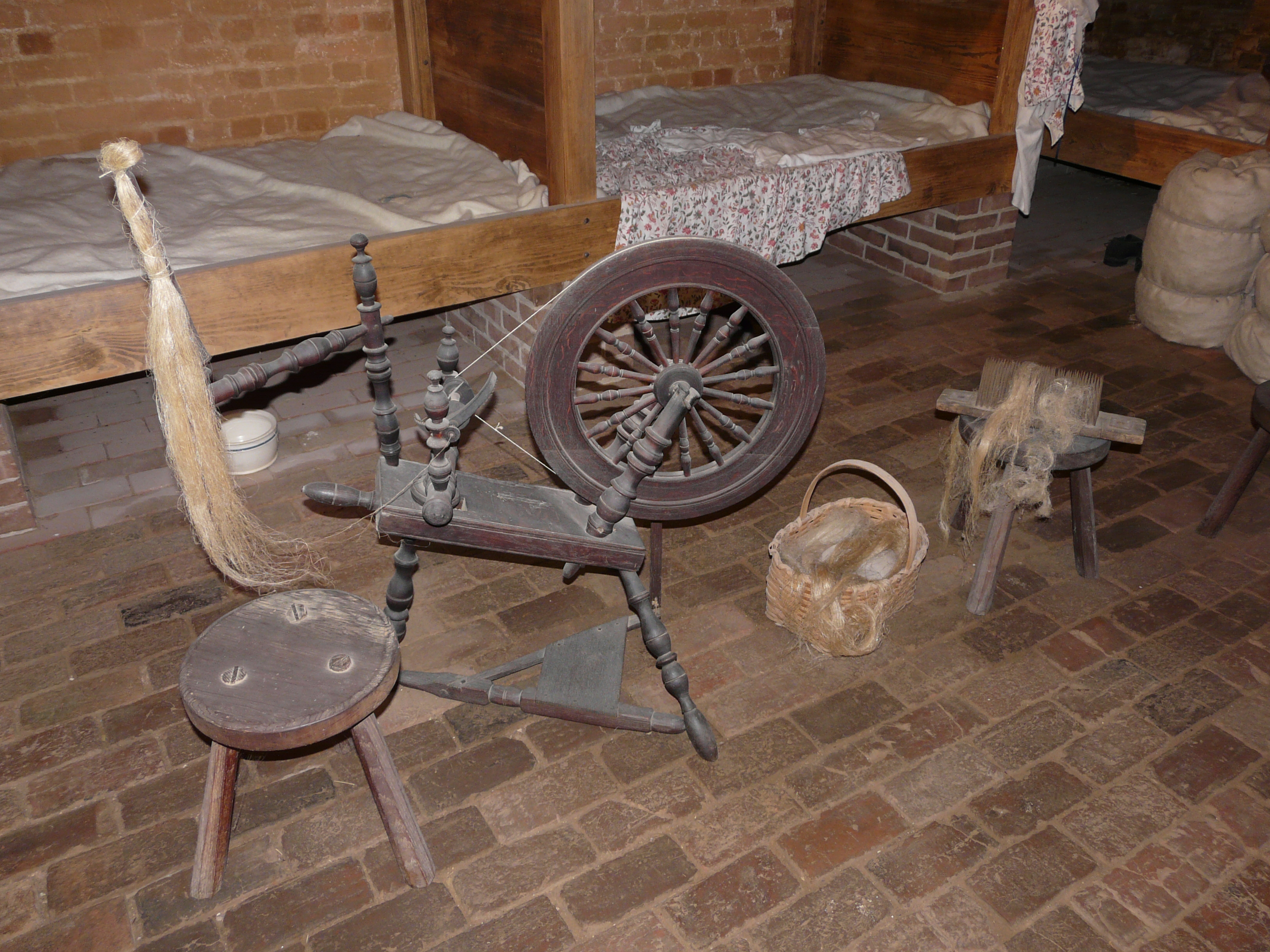
Flax spinning wheel at George Washington’s Mt. Vernon home, in the sleeping quarters of the plantation’s slaves: “The spinning house was the most important structure on the north lane. At Mount Vernon ten or more slaves were constantly employed spinning and knitting. The wool and flax fiber that they worked with were grown on site.” Mount Vernon Educational Resources (Slavery: Plantation Structure)

P1050617_cropped

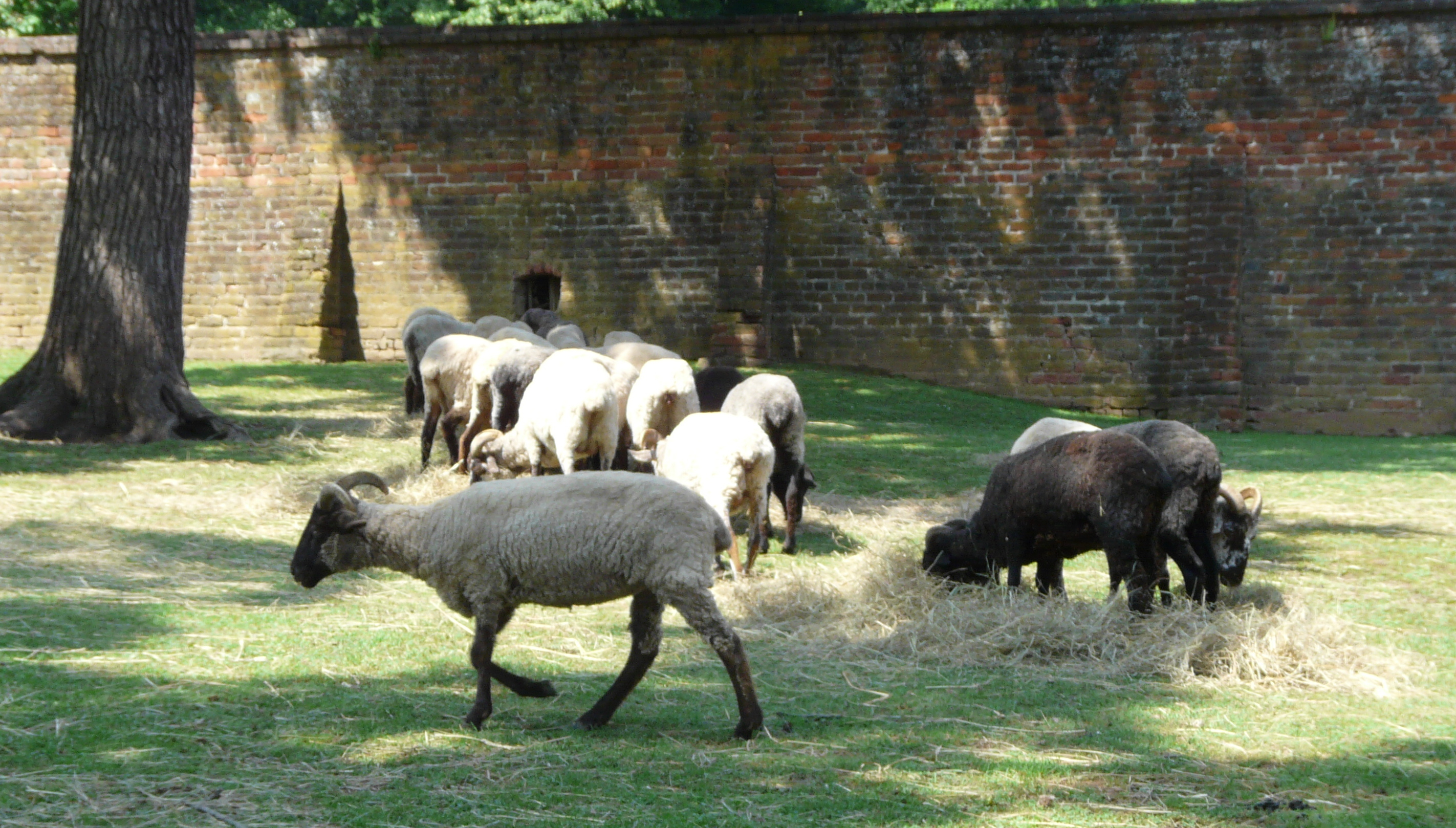
Sheep grazing at home, that is, George Washington’s home.

Finding a gem at grandma’s house

17 Sunday Mar 2013

Posted by theknittedword in American history, Book review, Craft magazines, Knitting History, Minnesota, Pattern, Recipe, Women's history

≈ 1 Comment

IMG_4577

Exploring at great grandma’s farm.

It is hard not to find myself exploring at my grandma’s large, old farm house in southern Minnesota, a place that once housed my grandparents, their five children, their in-laws, and a great aunt. It is a house that has names for the rooms: the girls’ room, Olga’s room, the Mystery room, great grandma and grandpa’s room. Even when full of guests for the holidays I can easily find myself alone in a room full of my family‘s history in books, sheet music, clothes, toys, and blankets.  My grandma loves history too, and going through closets she often finds old family treasures, like long-lost letters and pictures she had almost forgotten about.

On my last visit, knowing my interest in knitting my grandma showed me a small collection of pocket-sized craft magazines from the 1950’s and 60’s which her mother-in-law had subscribed to, called The Workbasket. She let me take some home, and I realize now that I assumed they would not really be of much value to my knitting except as a token of history. My assumption has partly proven true: so many things are just not my style or are totally unnecessary in the 21st century. There are patterns for crocheted doilies to protect the back and arms of your couch or to protect your tables, for hand-made lace to edge your pillows, for hand-crocheting bands to hold together your linens nicely, for tatting the edges of your handkerchiefs. The February 1956 issue has one pattern for handkerchief edging that “will really be a conversation piece if worked in two colors” (vol. 21, no. 5, page 30). Ah, now if only I had a handkerchief… Some of the advice is silly, today:  “Saran Wrap,” they write, “the clear plastic film, is a wonderful help in storing sweaters, afghans, stoles and other woolens.” And when your knees need a break from gardening? Sew your old shoulder pads into the knees of your gardening slacks!  Imagine Martha Stewart telling readers to do that, or to add rotted manure or dried cow manure to houseplants to help them grow better. Or to sell greeting cards to friends and neighbors to make money for yourself or as a fundraiser for your church: in the January 1956 issue (vol. 21, no. 4) I found no fewer than eleven large ads for how readers can do this and “make $50 to $250 or more in your spare time – without any experience!”

IMG_4587

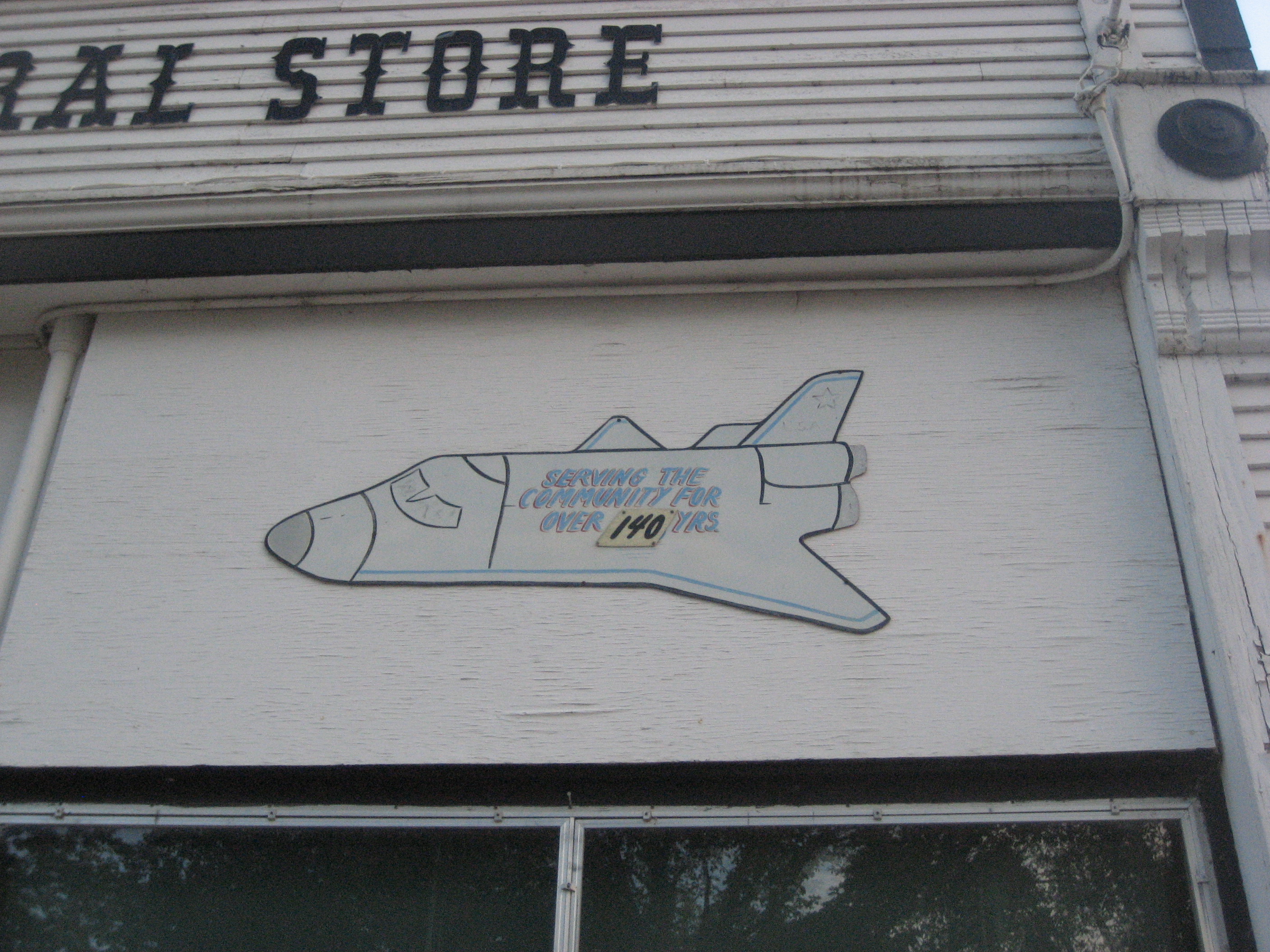
The local General Store, closed for a few years now but still stocked with cards.

Handkerchiefs, shoulder pads, slacks, ads for inexpensive accordions and Orlon, an acrylic/polyester/vinyl yarn that is now discontinued, black-and-white photos, the tiny print, the rough, yellowed paper – the magazine is definitely dated. But it’s not useless, not at all. There are so many gems I found in these journals, like the adorable crocheted belt in the June 1955 issue and the round knit rug, pattern below, which I am adding to my knitting to-do wish-list.  I am always keeping an eye out for pretty knitted summer sweaters and I happily found one with raglan sleeves and a buttoned placket in the August 1965 issue. Of course, I have to watch out for the details in these older patterns. Often the exact type of yarn is not given (the January 1956 cover sweater pattern gives only, “a deluxe sock and sport yarn was used to make this model”), and  the sizing is something to watch out for too: a small is bustline 32; large is bustline 36.  Otherwise, there are just different types of patterns to be found in this magazine. Today in knitting magazines I see patterns for hats, socks, scarves and sweaters; in these magazines from 1955, 1956, and 1965 I see place mats, rugs and sweaters. I was surprised to see that so many patterns required size 10 needles. I had assumed that this larger needle was a contemporary phenomenon.

The Workbasket started in 1935 and ceased publication in 1996, and during that time fashion and technology evolved dramatically; the change is clear even in the brief span of issues that I have, 1955-1965. In the 1955 and 1956 issues, the only color is on the cover in the template background; by my August 1965 issue, models are posing in their hand-knit sweaters in full color on the cover and sometimes inside. I still found doilies and one recipe asking for graham flour (a rarity in grocery stores today) in the 1965 issues, but gone are the card-selling advertisements and the money-making opportunities for stay-at-home women. Instead of the delicate doily place mats in the earlier issues, I found a beautifully knit place mat in April 1966 (vol. 31, no. 7, page 11) that is pretty and practical and could easily be found in a contemporary knitting journal. On a side note, I thought it was interesting to see that pink was definitely being marketed for girls in one 1966 issue: a pink-knit dress for an infant is called a “lovely little dress for some precious princess,” (More on the transition from blue to requisite pink for baby girls in the United States at: http://www.pinkisforboys.org.)

With recipe, home, garden sections and fun, quirky ways to repurpose older things, The Workbasket is, I suppose, one of the predecessors to Country Living and Martha Stewart (though in today’s magazines the ideas are less quirky and more snarky, which is getting boring to me). Exploiting and promoting the importance of home in our lives and culture, these journals are a source of ideas for women who want to beautify and update their homes and lives and families with creativity and individuality and thrift and the latest fashions. One commentator on one of the many websites devoted to The Workbasket thought that this type of journal in the 1950’s was a sign to women to stay at home and “stay in their place.” That’s tough for me to agree with. I love these types of magazines and see so much creativity and ingenuity in them, though even more so in The Workbasket than in today’s more sleek, polished, and generic magazines. I can’t help but think that this journal for that period in time was providing a space and platform for women to explore their creativity while raising kids and taking care of hearth and home, whether they wanted to or had to or felt compelled to. Based on the great number of money-making schemes in these journals, I can see that this was a magazine for women anxious to earn money; based on the great variety of ideas for how to reuse and create things, I can see that the readers were anxious to be creative, inventive, useful, and efficient.

Thinking of these magazines in history, I am reminded of how women were negotiating the new roles they found themselves in by the middle of the 20th century – new roles, yes, because the decades that their mothers and grandmothers were raising kids were so completely different from this. Who else did they have to learn from? The women in the 1930’s and 1940’s could not look back at how their mothers raised them in the 1910’s and 1920’s to figure out how to navigate this new era of canned soup and pudding mix and Orlon and higher expectations for hosting and cleanliness. (Can you tell I’ve been influenced by Ruth Schwartz Cowan? She wrote “More Work For Mother: The Ironies Of Household Technology From The Open Hearth To The Microwave” and talks at length about how expectations have been growing for the average women in the home, even as there is less help to do it.) And so while I have scoffed at the elaborate doilies and hand-croched bands to wrap one’s neatly folded linens, I also love the relatively easy way that women could bring in little touches of sophistication, of refinement, to their newly modernized homes while managing food and home and children and working, teaching piano, doing farm chores, or raising money for school. Even my history-loving grandma, who is 92 and a devoted musician in love with her piano, has delighted me by giving us all hand-embroidered towels as gifts. Where does she find the time, I wonder?

By the way, I’m not the only one not untouched by my grandmother’s craftiness: while reading a feature about a textile artist in the February 2013 Martha Stewart, the featured artist was asked for the inspiration behind her witty, whimsical, artful creations. Her answer? “My grandmothers tatted or made their own dolls or nutty puppets,” she said. Exactly.

Round Knit Rug, from the June 1955 issue, Vol. 20, no. 9, page 14-15: Rug yarn and number 10 wooden knitting needles were used in making this simple wedge pattern. The completed rug may have 11 or 12 wedges in all. It may be made any size and may be made oval if desired by knitting full length rows for sides. Abbreviations: K (knit); p (purl); sts (stitches); rnd (round). Cast on 48 sts (or any multiple of 3 depending on size desired).

Rnd 1: K 6, p 3, turn.
Rnd 2: K 9.
Rnd 3: K 6, p 6, turn.
Rnd 4: K 12
Rnd 5: K 6, p 9, turn.
Rnd 6: K 15.
Rnd 7: K 6, p 12, turn.
Rnd 8: K 18.
Rnd 9: K 6, p 15, turn.
Rnd 10: K 21.
Rnd 11: K 6, p 18, turn.
Rnd 12: K 24.
Rnd 13: K 6, p 21, turn.
Rnd 14: K 27.
Rnd 15: K 6, p 24, turn.
Rnd 16: K 30.
Rnd 17: K 6, p 27, turn.
Rnd 18: K 33.
Rnd 19: K 6, p 30, turn.
Rnd 20: K 36.
Rnd 21: K 6, p 33, turn.
Rnd 22: K 39.
Rnd 23: K 6, p 36, turn.
Rnd 24: K 42.
Rnd 25: K 6, p 39, turn.
Rnd 26: K 45.
Rnd 27: K 6, p 42, turn.
Rnd 28: K 48.
Rnd 29: Work same as rnd 1. This begins the second wedge.

Make 11 or 12 wedges in all. Sew last row to the first row. Bind off on a knit round.

IMG_4594

My grandma’s local general store, which closed down after 140 years.

Apricot Corn Flake French toast, my foodie sister-in-law has informed me, is still a very cool, very contemporary thing to make today. From the September 1966 issue, no. 12, vol. 31, page 30: “You’ll have many calls for seconds for this Apricot Corn Flake Toast” — 2 eggs, ½ cup apricot nextar; ¼ tsp salt, 8 slices day old bread, 3 cups corn flakes presweetened and crushed to make 1 ½ cups, 2-3 T butter or margarine: Combine eggs, apricot nectar and salt; beat. Dip bread slices in egg mixture, then cover both sides with cereal crumbs. Pan fry in butter or margarine until lightly browned and crisp on both sides, turning once. Serve hot with syrup, jelly or confectioners’ sugar. Yields 4 servings. 

IMG_4575

My daughter taking pictures at great grandma’s farm.

The life and death of an heirloom

25 Friday Jan 2013

Posted by theknittedword in American history, Art, Craft magazines, Knitting History, Uncategorized, Women's history

≈ 1 Comment

I’ve been looking through some American craft magazines from the 1940’s, 50’s and 60’s and marveling at the changes in our culture since they were published: there are numerous patterns for lace doilies and lace edging for women’s handkerchiefs, advertisements for wonderful new types of synthetic yarn, and articles about how to make money by recycling tin cans into plates or selling mail-order greeting cards. It makes me wonder, what happened to all of the things that the readers – like my grandmothers and great grandmothers – might have made from these magazines?

I suppose they could have ended up in Mike Kelley’s 1987 piece, “More Love Hours Than Can Ever Be Repaid,” which I saw in the 2011 Walker Art Center exhibit The Spectacular of the Vernacular. I went there to see two beautiful sculptures by my brother, Aaron. The exhibit “considers how artists have claimed homemade handicrafts or rustic aesthetic traditions in new ways.” (PBS.org) Kelley did that with his huge tapestry of old, discarded hand-made dolls, stuffed animals and afghans.

To me, his piece was looking at and questioning the value and necessity of homemade things in our culture. As a life-long knitter, I took it personally. The bears and afghans were familiar and reminded me of the crocheted and knitted things my grandma, neighbors, and other family friends made for me and my brothers in the 1970’s and 1980’s. More importantly, only a few weeks before seeing the Walker exhibit I myself had given a hand-knitted bunny to my four-year-old daughter for Christmas.

IMG_2782

While my daughter liked receiving it – she proudly remembered me working on it – I noticed several days later that she hadn’t played with it yet, even though the wool was locally spun (Bemidji Woolen Mills); the dress was made from luxurious, somewhat expensive alpaca yarn; and I had spent hours making a swatch, planning out the yarn, and knitting and piecing it together (I hate piecing). It had been a labor of love for my child. But despite my best efforts, the bunny didn’t really turn out to be as “good” as store-bought: it wasn’t as soft and cuddly as her plush bears, it had no buttons or batteries. So when I saw Mike Kelley’s piece, I wondered: will my daughter’s little bunny end up discarded like these other imperfect, scratchy homemade bears and blankets? What becomes of the imperfect, useless, scratchy, acrylic or wool hand-made things when there are perfect, shiny machine-made products that often become more loved, more used, more necessary to our daily lives? Is there a general lack of quality craftsmanship that is missing in our craft culture in America, where just the fact that something is handmade and not made at a factory makes an item not only a novelty but an heirloom as well?

These questions, I suppose, compel me to try to make things better. That is, if I can make something that is really beautiful, really special and fits just perfectly, it will be as good as factory-made and store-bought and will be loved and used – and keep it from ending up in the dustbin. Ultimately, though, I’m going to say that it doesn’t really matter what happens with my knitting after I’ve finished it and given it away. I love the knitting process and the moment of giving something I’ve made, and of course I would like to know the person appreciated it and could use it. But after I’ve given it away, it is no longer for me to decide. And I am only as good as my latest work, right? So I will keep trying to make better bunnies and socks and scarves…

And as for my own family’s many “heirloom” sweaters, afghans and doilies, I am happy to say that, after a few button and stitch repairs and despite the fact that they are acrylic (I prefer wool) my husband’s grandma’s sweaters keep us beautiful and warm all winter and my grandma’s afghans keep my daughter cozy at night. The dozens of my grandma’s colorful and intricate hand-crocheted doilies, however, remain piled up in the drawer of my china cabinet. At least they have each other’s company: the bunny remains on my daughter’s dresser, well dressed, but alone.

Enter your email address to follow this blog and receive notifications of new posts by email.

Archives

  • March 2016
  • November 2014
  • October 2014
  • September 2014
  • September 2013
  • July 2013
  • June 2013
  • April 2013
  • March 2013
  • February 2013
  • January 2013
  • December 2012
  • November 2012
  • October 2012
  • September 2012
  • August 2012

Topics

  • American history
  • Art
  • Article review
  • Book review
  • Craft magazines
  • DPN's
  • Family history
  • Felt
  • Flax
  • Indiana
  • Industrial Revolution
  • Knitting History
  • Latvia
  • Minnesota
  • New York City
  • Pattern
  • Pottery
  • Recipe
  • Russia
  • Scandinavia
  • Sheep
  • Socks
  • Spinning
  • Translations
  • Uncategorized
  • Weaving
  • Women's history

Blogs I follow

  • carolynmaurice
  • mauricesgarden
  • Norway. Meaning?
  • Max Schireson's blog
  • Weaving Gifts Together
  • domaphile
  • ClothRoads
  • Gather
  • wool&gathering
  • JjD
  • Antris Blog
  • PRACTICE SPACE
  • KDD & Co
  • The Domestic Soundscape
  • sourtoothjournal.blogspot.com
  • The Knitted Word

Some interesting websites

  • ClothRoads “Our Mission: Creating opportunities for supporting indigenous textile artisans worldwide.”
  • Thrums: A world of textiles in books and other media
  • Bloc Socks: “Tell Your Feet the Cold War is Over”
  • Musturs: Adītāju klubiņš / Knitters club
  • Unbored: The Essential Field Guide to Serious Fun
  • Meisterdarbs: A knitting website, this page lists the most interesting Latvian hand-craft blogs

Interesting books

Meta

  • Create account
  • Log in
  • Entries feed
  • Comments feed
  • WordPress.com

Create a free website or blog at WordPress.com.

carolynmaurice

This WordPress.com site is our trip to SE Asia/November 2012

mauricesgarden

Norway. Meaning?

Max Schireson's blog

Thoughts on technology and the tech business

Weaving Gifts Together

domaphile

ClothRoads

Gather

:handmade shoppe & Co:

wool&gathering

Knitting, design, wool and other gatherings....

JjD

Antris Blog

Rokdarbi

PRACTICE SPACE

KDD & Co

Award-winning Scottish publishing and design

The Domestic Soundscape

making, listening, thinking

The Knitted Word

Privacy & Cookies: This site uses cookies. By continuing to use this website, you agree to their use.
To find out more, including how to control cookies, see here: Cookie Policy
  • Subscribe Subscribed
    • The Knitted Word
    • Already have a WordPress.com account? Log in now.
    • The Knitted Word
    • Subscribe Subscribed
    • Sign up
    • Log in
    • Report this content
    • View site in Reader
    • Manage subscriptions
    • Collapse this bar
 

Loading Comments...